

If your USB drive is not recognized, check whether it appears in Disk Management or Device Manager. You can recover data before repairing an unallocated, unknown, or inaccessible drive. If it is not detected anywhere, try another USB port or computer.
Quick Answer
When a USB drive is not recognized, open Disk Management and Device Manager to see whether Windows detects the device.
- If it appears in Disk Management but has no drive letter: Assign a drive letter.
- If it shows as unallocated or unknown and contains important files: Recover the data before initializing, repartitioning, or formatting the drive.
- If it appears only in Device Manager: Try another USB port, disable USB power saving, or reinstall the driver.
- If the USB drive is not detected anywhere: Test it on another computer. Persistent failure may indicate a hardware problem.
Determine Why Your USB Drive Is Not Recognized
USB drives not recognized or not showing up is a frustrating problem that can happen on Windows PCs due to driver errors, partition issues, or hardware failure.
This guide helps you diagnose the type of problem first, choose the right recovery method, and avoid common mistakes that lead to permanent data loss.
First Step: Determine the Type of USB Failure
Before attempting recovery or repair, check where the USB drive appears in Windows. A USB device not recognized can show different symptoms depending on whether it appears in Device Manager, Disk Management, or neither location.
| Layer | System status | Action |
| USB shows in Device Manager but not Disk Management | Hardware detected | Check USB ports or drivers |
| USB shows in Disk Management but not in File Explorer | Partition broken/drive letter missing | Add a drive letter or stop using the disk and recover data first |
| USB not showing up anywhere | Not detected by the system | Likely hardware failure; software recovery limited |
Knowing the type helps prevent actions that destroy recoverable data on the unrecognized USB drive.
Case 1. USB Appears in Disk Management
Situation 1. The Drive Shows as Unallocated
A USB drive may appear as Unallocated when its partition information is lost or corrupted. Previous files may still be recoverable, so avoid creating a new volume or formatting the space if you need the existing data.
Common causes include:
- Sudden removal during file transfer
- Unexpected power loss
- Partitioning mistakes
- Corrupted partition tables
- Failed formatting attempts
How to handle it:
- Recommended method: Use a recovery tool like MiniTool Power Data Recovery to scan the drive and retrieve files. Then repartition the USB drive for further use.
- Alternative method: Use partition recovery software like MiniTool Partition Wizard to recover lost USB partitions along with data stored on it.
Stage 1. How to recover files from unallocated USB drives
When a USB drive appears as unallocated, data recovery software is required to retrieve the files. MiniTool Power Data Recovery is a reliable option for this purpose. You can try its free edition to check if your data is recoverable; it allows recovery of up to 1 GB at no cost.
MiniTool Power Data Recovery FreeClick to Download100%Clean & Safe
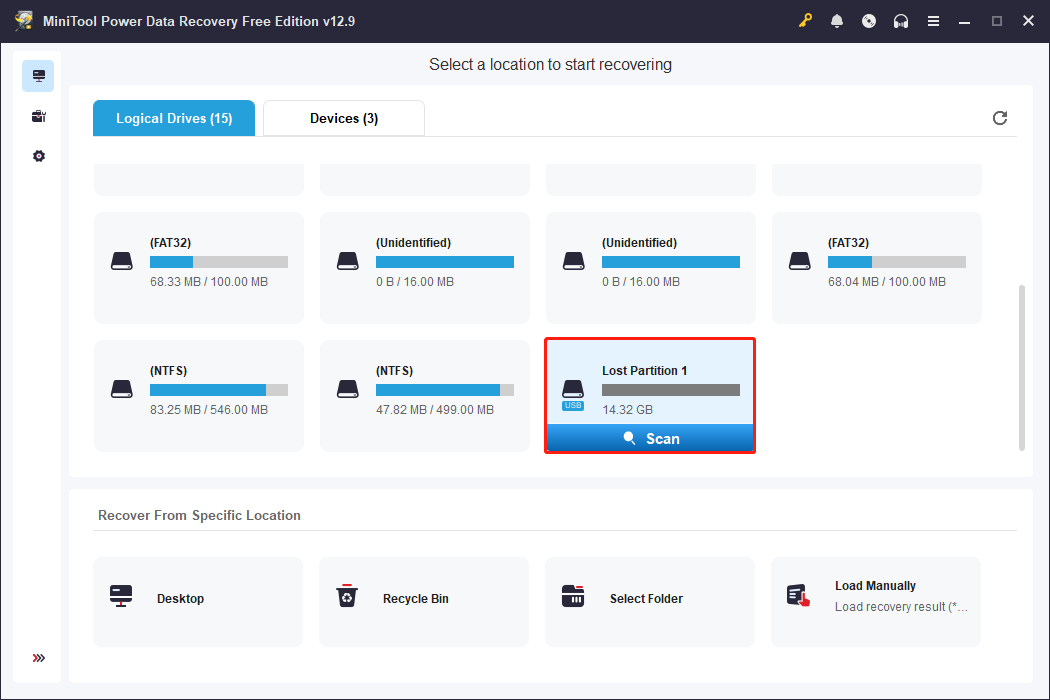
Step 1. Scan the USB drive
Launch the software and perform a full scan of the unallocated USB drive. It is important not to stop the scan midway, as doing so may result in missing some recoverable files.
Step 2. Find and preview your files
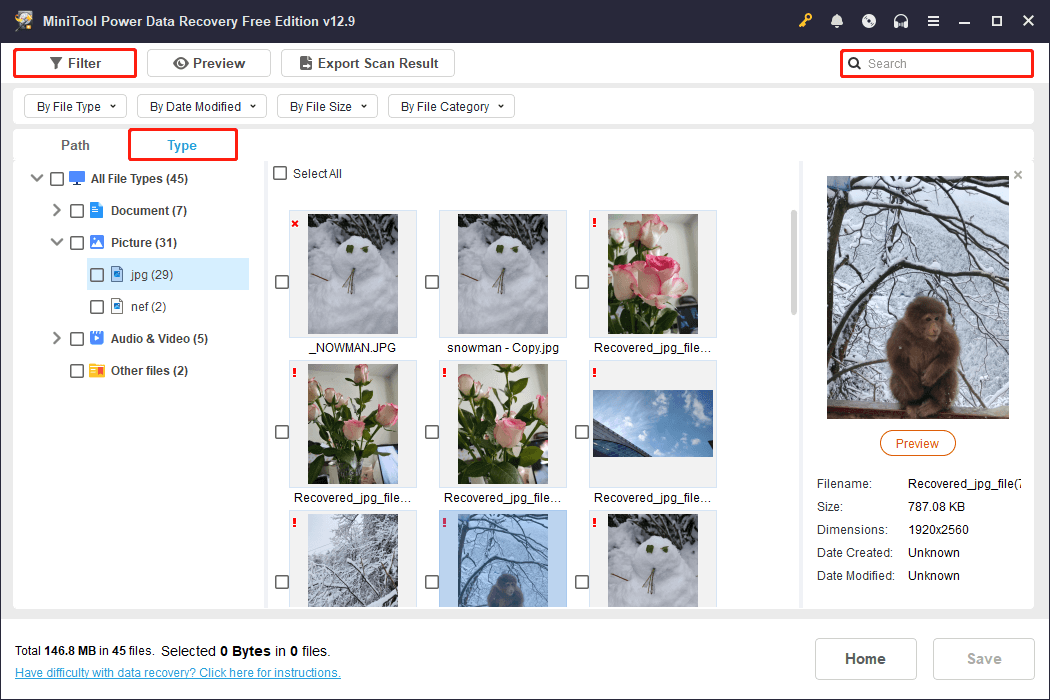
Once the scan is complete, browse the file list to identify the files you wish to recover. Use the Filter, Type, and Search functions to improve efficiency:
- Filter and Type: Narrow down files based on attributes such as file type, size, or modification date.
- Search: Locate a specific file by entering its name.
After preliminary filtering, you can preview files by double-clicking them. This step helps verify the content, avoiding unnecessary restores.
In addition, the free edition of MiniTool Power Data Recovery allows recovery of up to 1 GB. Using the Preview function can help prioritize the most important files within this limit.
Step 3. Save required files
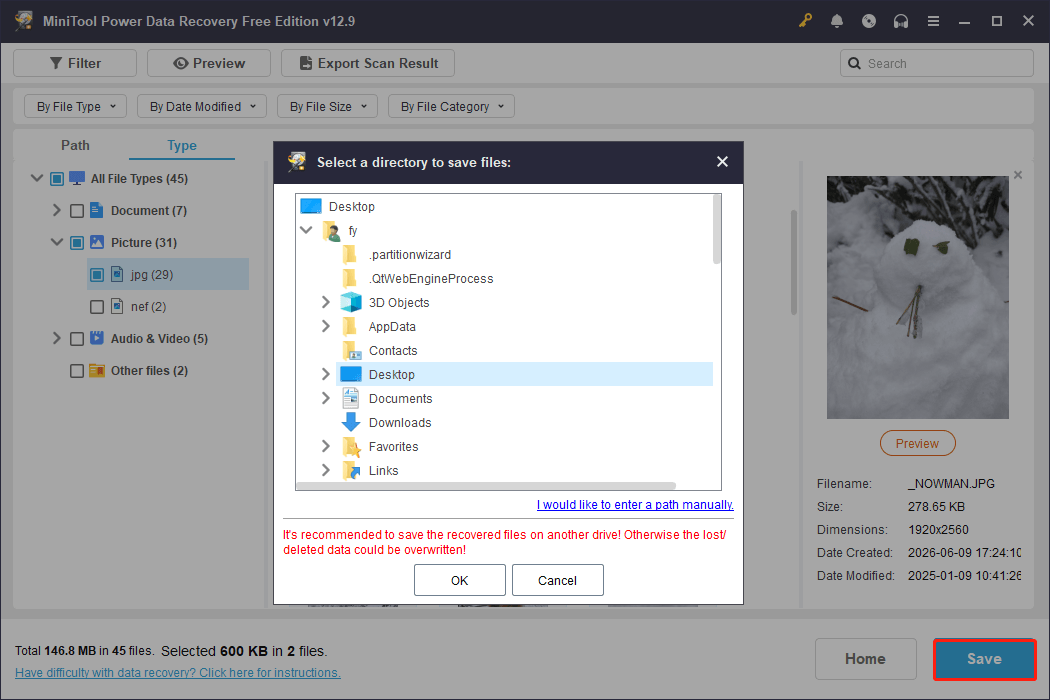
Select all the files you wish to restore and click Save. A window will appear asking you to choose a destination folder.
Stage 2. How to create new partitions on the USB drive
Once you have recovered your important files from the USB, you can create new partitions to make the drive usable again.
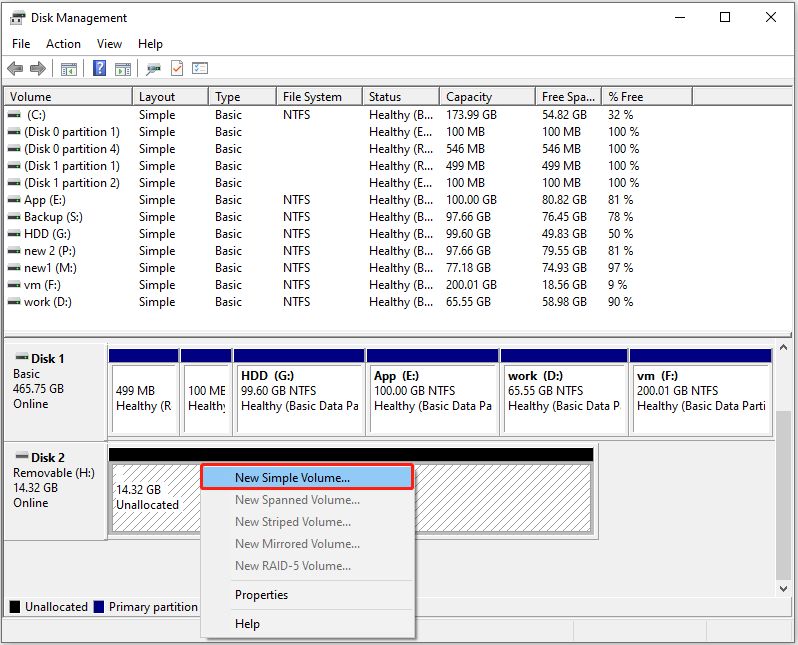
In Disk Management, right-click the unallocated space and choose New Simple Volume. Then follow the on-screen wizards to set the partition size, drive letter, file system, and confirm the actions.
Situation 2. The USB Drive Shows as Unknown
Sometimes a USB drive appears as Unknown or Not Initialized in Disk Management. If it contains important files, recover them first before initializing the disk or creating a new partition.
How to initialize a USB drive:
Step 1. Right-click the disk label (Disk X), not the unallocated space, and select Initialize Disk.
Step 2. Choose a partition style: GPT for modern systems, MBR for legacy compatibility, then click OK. (MBR vs GPT)
Step 3. Right-click the unallocated space and select New Simple Volume. Then follow the wizards to partition the drive.
Situation 3. The USB Drive Cannot Be Formatted or Initialized
Some USB drives appear in Disk Management but cannot be formatted or initialized. This is usually due to stubborn logical errors or severe file system corruption.
In this case, use the DiskPart tool to clean the drive and reformat it.
Step 1. Run Command Prompt as an administrator.
Step 2. Execute the following commands and press Enter after each:
- diskpart
- list disk
- select disk # (replace # with the actual number of the USB drive)
- clean (it will erase all data on the selected disk)
- convert gpt (or type convert mbr to use the MBR partition style)
- create partition primary
- format quick fs=ntfs (you can replace ntfs with fat32 or exfat)
- assign (it will assign an available drive letter)
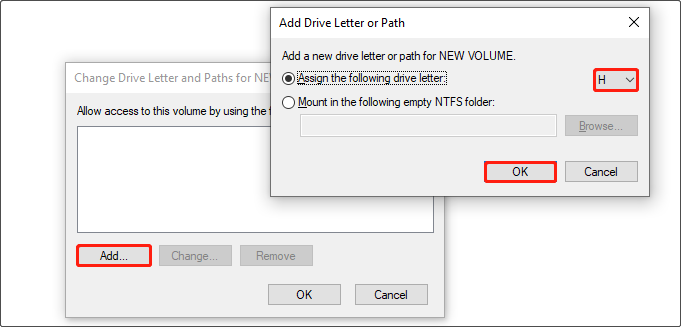
Situation 4. The Drive Lacks a Drive Letter
Sometimes, the USB drive is not showing up in File Explorer because the device has no drive letter. If this is the cause, you can easily fix the problem by assigning a drive letter.
Step 1. Right-click on the USB partition and choose Change Drive Letter and Paths.
Step 2. Click Add and choose a drive letter from the drop-down list. Click OK to save the change.
Case 2. USB Not Detected Anywhere
If the USB drive does not appear in either Disk Management or Device Manager, Windows may not be detecting the device at the hardware level. Try another USB port, connect the drive directly instead of through a hub, and test it on another computer.
If it remains undetected, the problem may involve the USB controller, firmware, or other hardware components, and software-based recovery may not be able to access the drive.
If the drive remains undetected after testing another port and computer, consider professional data recovery if the stored files are important.
Case 3. USB Shows in Device Manager but Not in Disk Management
When the driver is missing or corrupted, the USB drive may only appear in Device Manager. In addition, power instability or USB ports not working can also cause the problem.
To fix the problem, try another USB port first, then check USB power-saving settings and reinstall the USB driver if necessary.
Method 1. Disable Power Saving
Each USB device can only work normally under certain power supply conditions. If the USB port provides insufficient power supply, the USB drive may not be recognized properly.
If you connect the USB drive via a USB hub, try to plug the USB drive into your computer directly to see if the USB can be accessed properly. If not, work with the following steps to check whether your computer has enabled the power-saving settings.
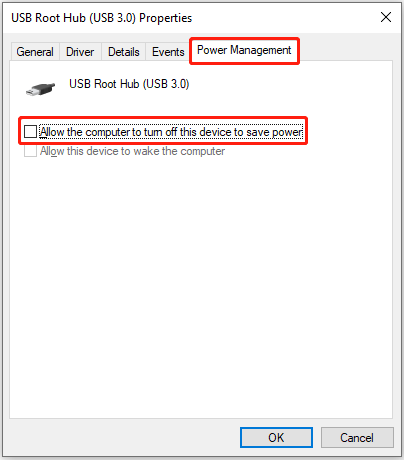
Step 1. Open Device Manager and expand the Universal Serial Bus controllers option.
Step 2. Right-click on the USB Root Hub and choose Properties.
Step 3. Change to the Power Management tab and uncheck the Allow the computer to turn off this device to save power option.
Method 2. Reinstall the USB Drivers
Reinstalling the USB driver in Device Manager can fix the driver issues that cause the disk detection problems.
Step 1. In Device Manager, expand the Universal Serial Bus controllers section and locate the USB device that is not working (it may show a yellow warning icon).
Step 2. Right-click on the device and select Uninstall device.
Step 3. Disconnect the USB drive and restart your computer.
Additionally, you can right-click the USB drive under Disk drives and reinstall the USB drive.
Common Mistakes When Dealing with an Unrecognized USB Drive
Before trying a fix, check how Windows detects the USB drive. The following actions can make data recovery more difficult:
- Creating a new partition before recovering important files.
- Saving recovered files back to the same USB drive.
- Formatting the USB drive before checking whether the existing data is recoverable.
- Using DiskPart clean before confirming that the drive can be erased.
USB Drive Not Recognized FAQ
Conclusion
When a USB drive is not recognized, check if Windows detects it in Disk Management or Device Manager. If it appears in Disk Management with important files, recover data before formatting or repartitioning.
If it only shows in Device Manager, check the USB port, power settings, and drivers. If Windows cannot detect it, test another port or PC, and consider professional recovery if needed.
For issues with MiniTool products, email [email protected].
User Comments :