

When you delete a file on Windows, it usually does not disappear permanently. Files moved to the Recycle Bin can be restored easily. After permanent deletion, Windows removes the file reference, but the actual data remains on the drive until overwritten. Read this guide to learn where deleted files go and how to recover permanently deleted files.
Quick Answer: Where Do Deleted Files Go on Windows?
Deleted files on Windows go through different stages:
- Normal deletion: The file moves to the Recycle Bin.
- Empty Recycle Bin: Windows removes the file entry, but the actual data remains on the storage device.
- New data overwrites the space: The file becomes impossible to recover.
What Happens When You Delete a File on Windows
When you delete a file on Windows, it usually does not disappear immediately. The location of deleted files depends on how you remove them. Windows handles deleted files differently depending on how the deletion happens.
Normal Delete: Files Move to Recycle Bin
The most common method to delete a file is by selecting it and pressing the Delete button.
In this situation, Windows does not permanently remove the file. Instead, it moves the file to the Recycle Bin. The file can be restored to its original location easily from the Recycle Bin.
Empty Recycle Bin or Shift +Delete: File Information Is Removed
Where do files go when deleted from Recycle Bin? When you empty the Recycle Bin or delete a file using Shift + Delete, Windows removes the file information from the file system, and the file will no longer appear in File Explorer.
However, this does not always mean that the actual file data has been erased from the drive. The storage space occupied by the deleted file is simply marked as available for new data.
In this case, data recovery software can help scan the storage device and find the recoverable data.
Overwriting: Deleted Data Is Permanently Lost
When new data is written to the same storage space, it may overwrite the deleted file. Once the original data has been overwritten, the deleted files may become impossible to recover.
Therefore, if you accidentally delete important files, stop using the affected drive as soon as possible. Avoid saving new files or installing programs on the same drive before attempting recovery.

Where Do Deleted Files Go on Different Devices
Deleted files behave differently on HDDs, SSDs, and USB flash drives.
Where Do Deleted Files Go on a Hard Drive
On traditional hard disk drives (HDDs), deleted files usually remain on the drive until the storage space is reused.
Because HDDs store data using magnetic disks, deleting a file mainly changes how Windows tracks the file rather than immediately removing the stored information.
Where Do Deleted Files Go on an SSD
Solid-state drives (SSDs) work differently from traditional hard drives.
Many SSDs use a feature called TRIM, which helps the drive manage unused storage space. When files are deleted, TRIM may notify the SSD that the space is no longer needed.
Because of TRIM, deleted files on SSDs can become harder to recover compared with HDDs.
Where Do Deleted Files Go on a USB Flash Drive
USB flash drives usually do not send deleted files to the Recycle Bin.
Instead, Windows marks the space used by deleted files as available for future storage. The files remain associated with the USB drive until the space is reused.
How to Recover Deleted Files on Windows
The data recovery method depends on how the file was deleted and whether a backup is available. Listed below are the general approaches to recover deleted files.
Method 1. Restore From Recycle Bin
Restoring files from the Recycle Bin is the easiest because it does not require additional software. Follow the steps below:
Step 1. Open the Recycle Bin from your desktop.
Step 2. Right-click the files and folders you want to recover and click Restore. They will be restored to their original locations.

Method 2. Restore Files From Backup
If the deleted files are not in the Recycle Bin, check whether you have a backup copy.
Possible backup sources include:
- Windows File History
- Windows Backup and Restore
- Cloud backup stored in OneDrive, Google Drive, or Dropbox
- External hard drive backups
- Professional backup software
Restoring files from a backup is the safest recovery method because it does not depend on whether deleted data still exists on the drive.
Method 3. Recover Permanently Deleted Files With Data Recovery Software
When files are permanently deleted, removed from the Recycle Bin, or deleted from external storage devices, Windows does not provide a built-in recovery option.
In these situations, data recovery software can scan the storage device and locate recoverable files.
MiniTool Power Data Recovery is capable of restoring all kinds of data from your internal/external hard disks, including documents, photos, videos, audio, emails, and more.
This tool has a free edition – MiniTool Power Data Recovery Free. To avoid unnecessary economic expenditure, you can download this edition and use it to recover 1 GB of files for free. If it detects more than 1 GB of files that need to be recovered, you can upgrade it to recover the excess.
MiniTool Power Data Recovery FreeClick to Download100%Clean & Safe
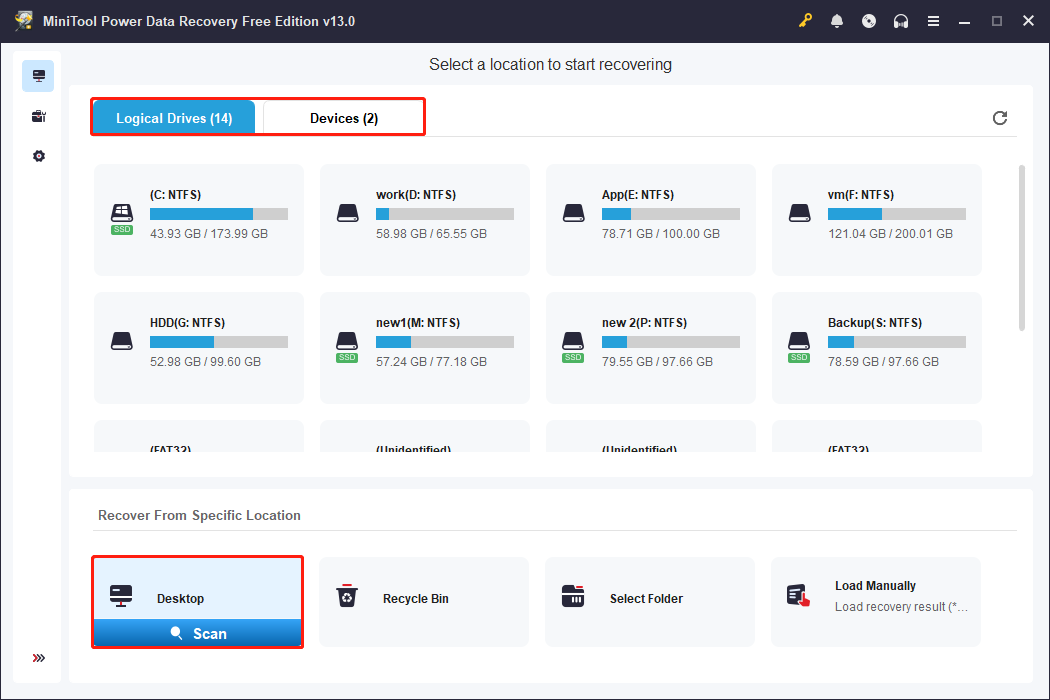
Step 1. Select the drive or location to scan
On the main interface of the software, select the target partition where data deletion happens and click Scan. Also, three quick scan options in the lower menu bar allow you to scan the desktop, the Recycle Bin, or a specific folder individually.
Moreover, if you are not sure where the files were deleted, you can move on to the Devices tab and select the entire disk to scan for deleted data.
Step 2. Find required files
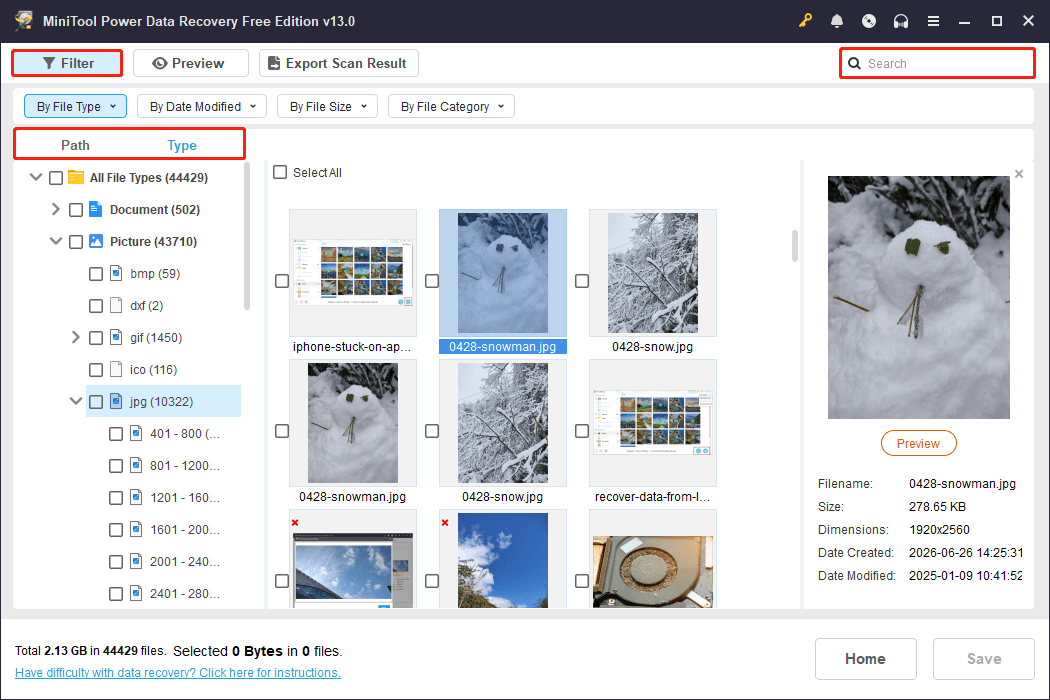
After scanning, you have two options to find the required data.
- Path: You need to expand the folders to locate the desired data by file path.
- Type: Under this category, the found files are classified by file type and file format. You can expand All File Types and find the files you want to recover according to file type.
Furthermore, this tool also provides you with two features for faster file discovery. Upon clicking Filter, you can customize file filtering rules including By File Type, By Date Modified, By File Size, and By File Category to narrow down the file results.
Type continuous keywords of a certain file in the search box and press Enter to find certain files.
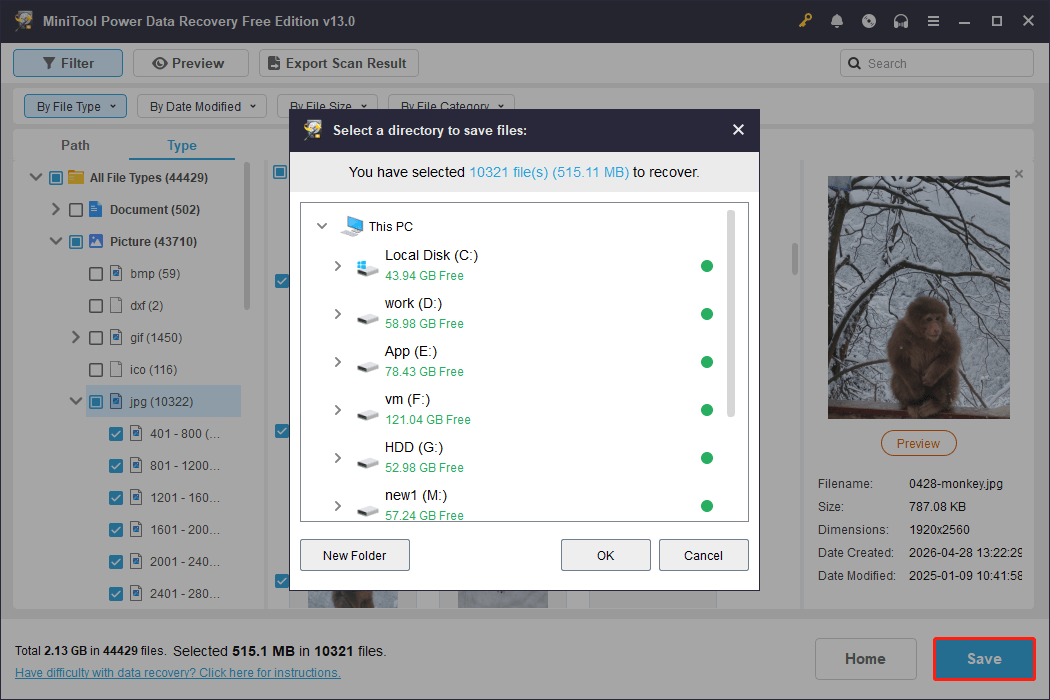
Step 3. Save wanted files
Click the Save button and specify a safe location to store the recovered files.
How to Prevent Permanent Data Loss
The best approach to avoid losing important files is to prepare before accidental deletion happens. Here are some useful tips.
1. Create Regular Backups
Regular backups provide the easiest method to recover lost files without relying on recovery software.
You can back up important files using Windows built-in features or reliable backup software like MiniTool ShadowMaker.
MiniTool ShadowMaker TrialClick to Download100%Clean & Safe
2. Keep Multiple Copies of Important Files
For important documents, photos, and work files, keep multiple copies in different locations. A common recommendation is the 3-2-1 backup strategy:
- Keep 3 copies of your data.
- Store them on 2 different types of storage.
- Keep 1 copy in another location.
3. Stop Using the Drive After Accidental Deletion
If you accidentally delete important files, stop using the affected drive as soon as possible.
Avoid installing new software or copying new data to the drive. New data may overwrite the deleted files and make recovery more difficult.
4. Enable Cloud Synchronization
Cloud services like OneDrive or Google Drive can provide another layer of protection. Cloud backup prevents data loss caused by physical hard disk failures.
Conclusion
In general, when you delete a file from a hard disk (both internal and external), it will be sent to Windows Recycle Bin, which gives a second chance to regain accidentally deleted files. However, there are also times when you can’t find deleted files in the Recycle Bin.
Well then, where do deleted files go? They’re not cleared completely from your storage device. It is only the relevant parameters (like file size and file location) that have been deleted; the real content of certain files still exists. You just lose access to the deleted files; they remain invisible until you use a special tool to recover them or store new data to overwrite them.
If you have any questions when using MiniTool products, please contact the support team at [email protected].
About The Author

Position: Columnist
Shirley holds a bachelor’s degree in English and has been an editor at the MiniTool Team for many years. She specializes in IT-related content, with a focus on data recovery, file backup, disk management, and other technical topics. She is committed to delivering clear, accurate, and practical solutions to help users resolve common computer issues.
User Comments :