

Do not worry if your sticky notes are lost or accidentally deleted. In this definitive guide, I will explain where the sticky notes folder is stored and how to recover sticky notes from Outlook, previous versions, and by using data recovery software.
Sticky Notes is a convenient Windows note-taking tool that helps users create reminders, save temporary information, and manage daily tasks.
However, sticky notes may disappear due to accidental deletion, Windows updates, system crashes, disk errors, malware attacks, or synchronization problems.
If sticky notes disappear from your computer, recovery may still be possible. Sticky Notes data may exist in local database files (such as plum.sqlite or StickyNotes.snt) or your Microsoft account.
To improve recovery chances, stop using the affected drive and avoid saving new files that may overwrite the deleted data.
Part 1. Where Are Sticky Notes Stored on Windows 11/10
Sticky notes are saved in a distinct database file (plum.sqlite or StickyNotes.snt) or, in some instances, associated with your Microsoft account (for newer versions of Windows).
Thus, before we explore the sticky note recovery steps, it’s important to know where Sticky Notes are saved in Windows 11/10/8/7:
- For Windows 10 (versions 1607 and later) and Windows 11, you can locate this file on your computer at the following path: C:\Users\%USERNAME%\AppData\Local\Packages\Microsoft.MicrosoftStickyNotes_8wekyb3d8bbwe\LocalState
- For Windows 10 (versions 1511, 1507), Windows 8, and Windows 7, the file location is the following path: C:\Users\%USERNAME%\AppData\Roaming\Microsoft\StickyNotes
Additionally, the file extensions for the Sticky Notes database can vary across Windows operating systems. The plum.sqlite file is primarily used in Windows 10/11. The StickyNotes.snt file is more commonly found in earlier versions of Windows, like Windows 8/7.
Part 2. Why Are Sticky Notes Lost
Knowing the file location of Sticky Notes can help you efficiently access, back up, or recover deleted or lost notes. However, before recovering lost Sticky Notes, it is helpful to understand why they disappear in the first place.
Sticky Notes can become lost for various reasons, including accidental deletion, software updates, system issues, syncing problems, or database corruption. Common causes include:
- Accidental Deletion: You may unintentionally delete sticky notes while organizing your desktop.
- Software Updates: Updates can lead to data loss if sticky notes aren’t properly backed up.
- System Crashes: Unexpected crashes or power failures can cause loss of sticky notes.
- Virus or Malware: Infections can damage or delete Sticky Notes data.
- Syncing Issues: Problems with syncing across devices can lead to lost notes.
- Disk Errors: Physical storage issues can result in data loss or corruption.
- Corrupted Database: The Sticky Notes database can become corrupted, resulting in lost notes.
Now, let’s dive into the effective solutions to recover deleted or lost sticky notes on your PC.
Part 3. How to Recover Sticky Notes on Windows 10/11
Before jumping into the most complex and specific methods, you need to do the first check to ensure your sticky notes are not lost or deleted from your computer, and no need to recover.
First Step: Verify Whether Your Sticky Notes Have Truly Disappeared
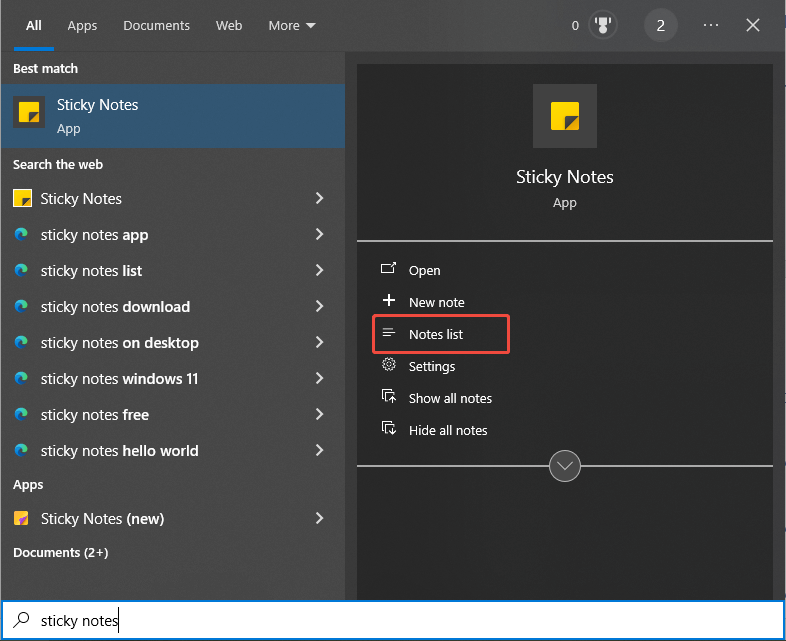
Sometimes, you may just close the sticky notes window, which doesn’t mean delete it. Instead, it simply minimized. You can reactivate it by selecting it from the Notes list in Sticky Notes. To access your Notes list, follow these steps:
- Press Win + S to access the Windows Search bar and type Sticky Notes in the box.
- Click Notes list under the Sticky Notes app.
- Next, in the pop-up window, you can locate your closed notes.
- If you don’t see your wanted notes, it may be hidden. Right-click the Sticky Notes app’s icon on your taskbar and select Show all notes.

Method 1. Recover Deleted Sticky Notes Using File Recovery Software
If you cannot find your lost sticky notes from the notes list, you can try using sticky note recovery software such as MiniTool Power Data Recovery Free.
MiniTool Power Data Recovery supports recovering various types of lost files, including deleted, hidden, formatted, or permanently deleted files. Here’s a closer look at how MiniTool can help recover Sticky Notes:
- Comprehensive Recovery: Recovers unintentionally or intentionally lost files from internal or external disks, including documents, photos, videos, and more, even from formatted or virus-infected drives.
- User-Friendly Interface: Features a simple design for easy and quick disk scanning and recovery.
- Controllable Process: Allows you to pause scanning and selectively filter, preview, and save desired files after scanning.
- Read-Only Scanning: Scans without modifying original data, ensuring secure data recovery.
- Strong compatibilities for Windows versions and languages: Works with Windows 11, 10, 8.1, and 8, and supports multiple languages for the interface.
- Free Data Recovery: Supports recovering 1 GB of data for free.
Next, we will show you the detailed steps of data recovery with MiniTool Power Data Recovery.
Step 1. Hit the download button below to get MiniTool Power Data Recovery on your computer.
MiniTool Power Data Recovery FreeClick to Download100%Clean & Safe
Step 2. Launch the MiniTool file recovery tool, and then you will see its main interface. Now, you should select the target partition under the Logical Drives section to scan for deleted sticky notes and click the Scan button.
Alternatively, scan the LocalState folder directly for the plum.sqlite file.
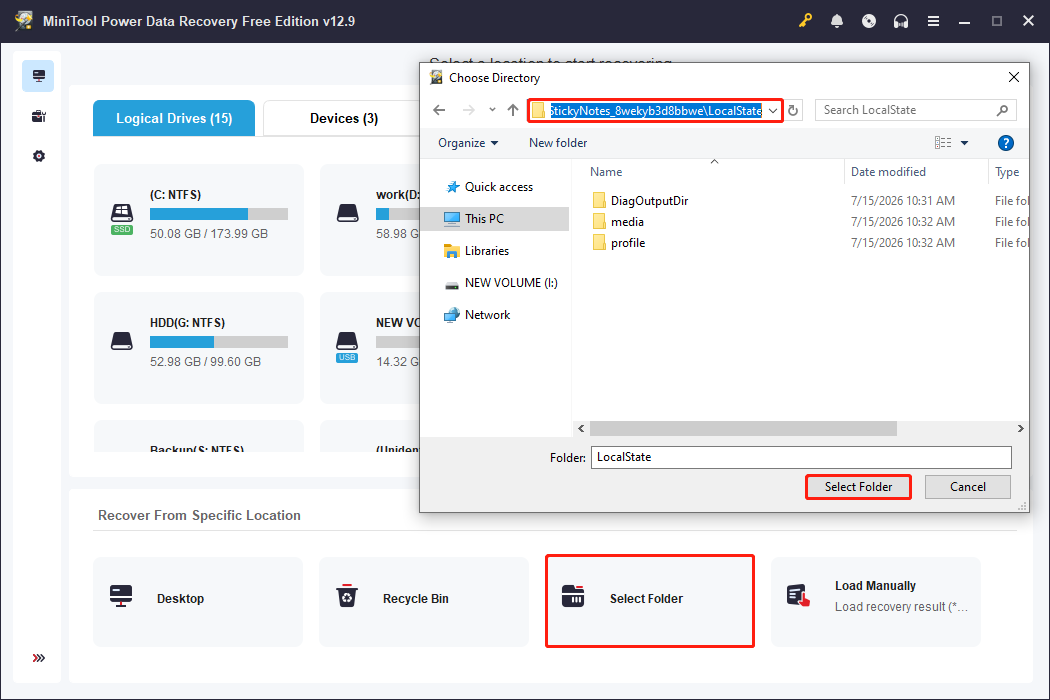
Step 3. After scanning, most of the discovered files are organized according to the original file structure found in the Path section by default. You can easily open each folder and its subfolders to locate the plum.sqlite file.
You can search for the plum.sqlite file by using the search box in the top right corner.
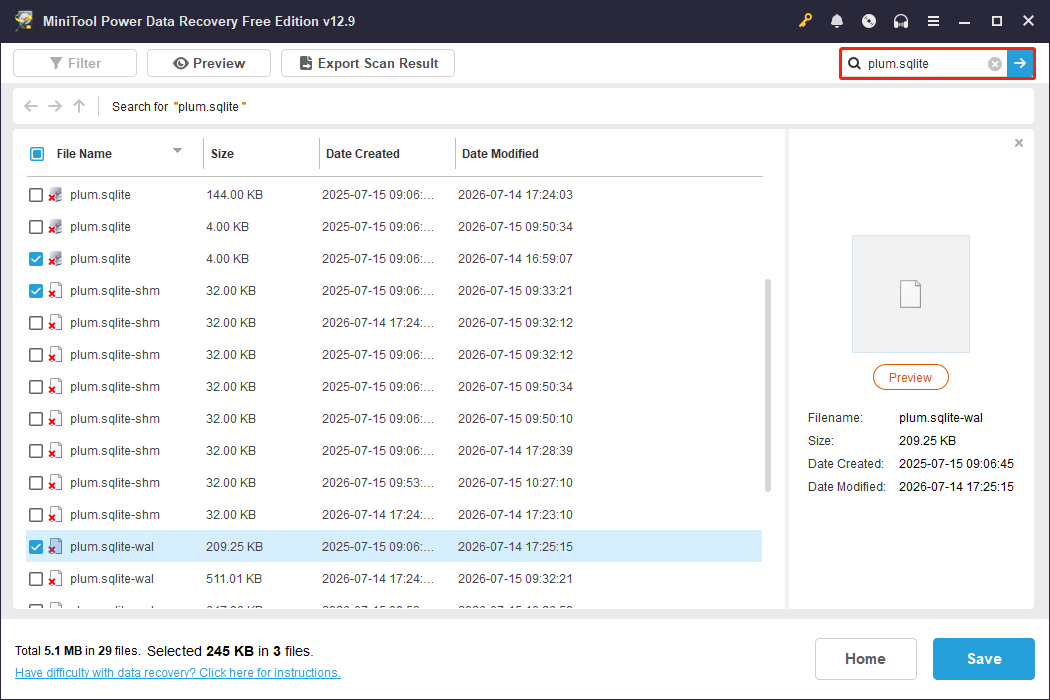
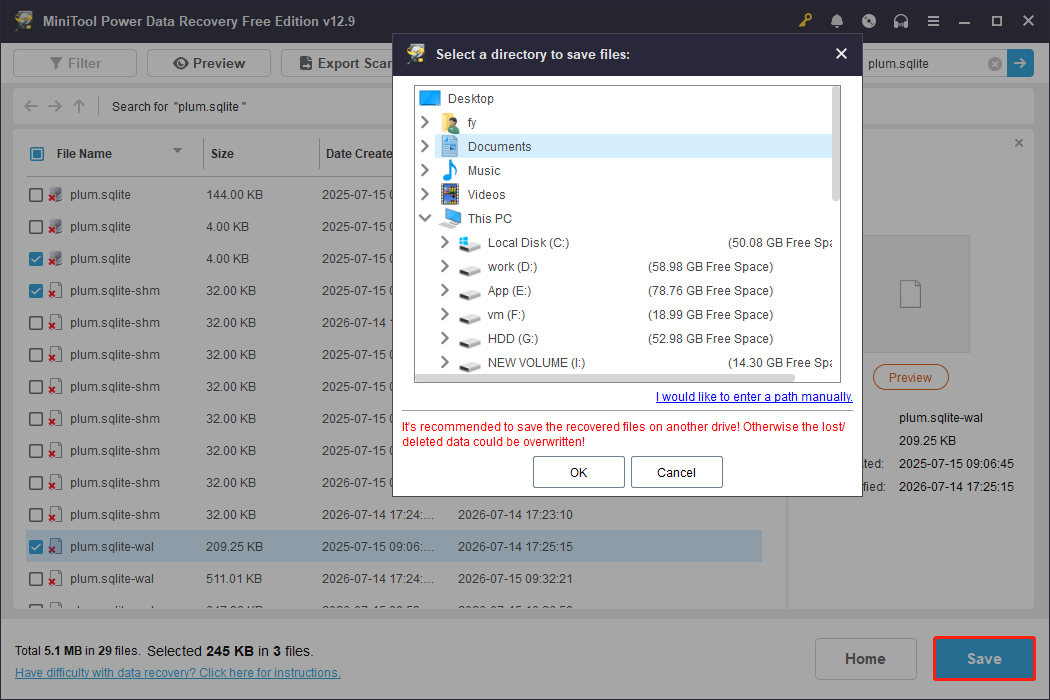
Step 4. In the Search results window, select the wanted files and click the Save button to store them. For sticky notes recovery, pay special attention to the plum.sqlite database file and the plum.sqlite-wal file, as they may contain your note data.
How to view your notes after recovering the plum.sqlite file:
First, use an SQLite database viewer such as Letos to open the recovered plum.sqlite file. Then, check the Data table to see whether your Sticky Notes content is available. If your notes appear, it indicates that the database contains recoverable note data.
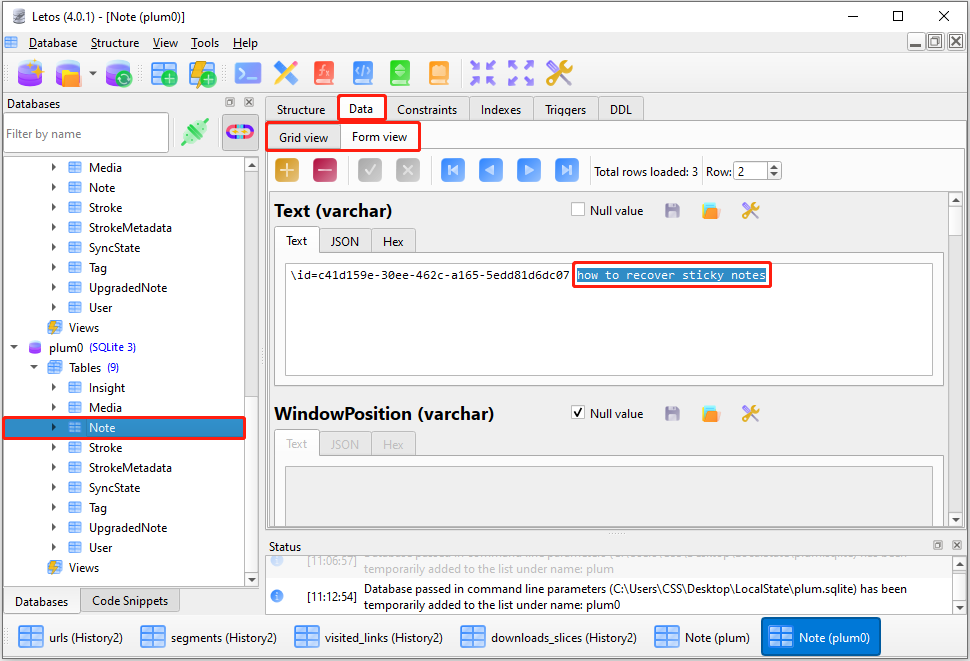
Next, copy the recovered database files back to the Sticky Notes LocalState folder and reopen the Sticky Notes app to check whether your notes are restored.
If your notes do not appear in the database viewer, the database may be incomplete, corrupted, or missing related files required to display the notes. In this case, the Sticky Notes data may be difficult to recover.
Method 2. Check the Notes Folder Within the Outlook Backup
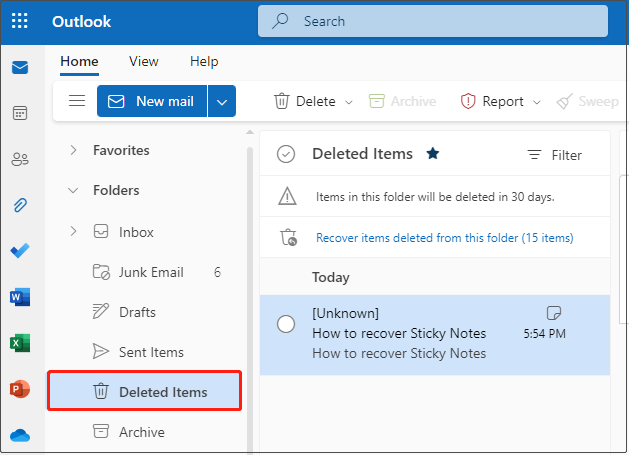
With the growing trend towards cloud-based services, Microsoft Outlook will link your sticky notes to your Microsoft account in its Notes folder. Meanwhile, if you accidentally delete a note, Outlook will transfer the deleted note to the Deleted Items folder. To check if your sticky notes are available, look in the Notes folder of your Outlook account by following these steps.
- Open the Microsoft Outlook app or go to the Outlook website page, and log in with the same Microsoft account that you have used to take sticky notes on your Windows computer.
- Navigate to the Notes section to check whether your sticky notes are here. If not, go to the Deleted Items tab, and you can find all the deleted notes here.
- Select the sticky notes you want to recover and click the Restore button.
Method 3. Restore Sticky Notes to Previous Versions
Another method to recover sticky notes is to use the Restore Previous Versions feature on Windows. File History is a backup feature in Windows that automatically conducts incremental saves of your data. Not only does it allow you to recover lost files saved with File History, but you can also select a specific version of that file for recovery.
If you’ve enabled the Windows File History backup feature and manually added the database file location for the Sticky Notes app in the backup list, this solution is applicable for you. Once these criteria are satisfied, you can follow the step-by-step instructions to recover stick notes:
- Press Win + R to open Run, type the following autosave folder location path, and press Enter. If you are using Windows 10 (versions 1607 and later) and Windows 11, type C:\Users\username\AppData\Local\Packages\Microsoft.MicrosoftStickyNotes_8wekyb3d8bbwe\LocalState\. If you are using Windows 10 (versions 1511, 1507), Windows 8, and Windows 7, type C:\Users\%USERNAME%\AppData\Roaming\Microsoft\StickyNotes.
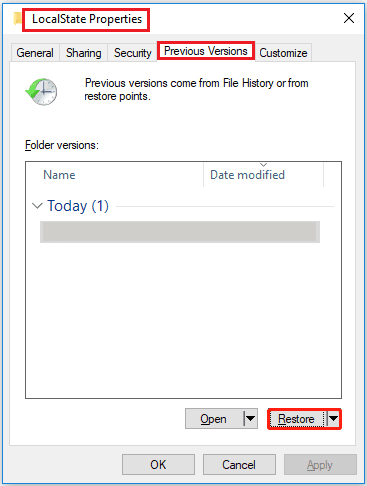
- Right-click the plum.sqlite file or the LocalState folder. Next, select the Restore previous versions option. This will display a list of older versions that you can recover to retrieve the deleted sticky notes. You can also view previous versions through the file’s Properties menu.
- Choose the version of the file that holds the missing notes, and then click Restore.
- In the pop-up window, choose Replace the files in the destination and click Apply > OK.
Alternatively, you can recover deleted sticky notes using File History. Firstly, type File History in the Windows Search box and press Enter. When the new interface pops up, select Restore personal files. You’ll get a list of all your files in their backups. Next, select the desired sticky notes and click the green Recover button.
Part 4. How to Back up Sticky Notes on Windows
To prevent losing important Sticky Notes data, you can back up the entire LocalState folder, which contains the Sticky Notes database and related files required for restoring your notes.
Follow these steps to back up Sticky Notes:
- Press Win + R, type %LocalAppData%\Packages, and press Enter.
- Open the folder named Microsoft.MicrosoftStickyNotes_8wekyb3d8bbwe.
- Right-click the LocalState folder and select Copy.
- Paste the folder to another safe location, such as an external drive or cloud storage.
If your Sticky Notes data is lost in the future, you can restore it by replacing the current LocalState folder with the backed-up copy. Make sure to close the Sticky Notes app before replacing the folder.
Part 5. Bottom Lines
In a word, this article explains how to recover sticky notes on Windows 11/10 with several feasible methods. With MiniTool Power Data Recovery at hand, you can easily carry out a sticky note recovery without data loss.
If you require assistance with MiniTool Power Data Recovery, don’t hesitate to reach out to the support team for help at [email protected].
About The Author

Position: Columnist
Shirley holds a bachelor’s degree in English and has been an editor at the MiniTool Team for many years. She specializes in IT-related content, with a focus on data recovery, file backup, disk management, and other technical topics. She is committed to delivering clear, accurate, and practical solutions to help users resolve common computer issues.
User Comments :