

A broken USB stick may suffer from logical errors or physical damage. This guide explains how to fix a broken USB stick, when you should recover data from USB stick first, and how data recovery software can help rescue accessible files before repair.
Quick Answer: How to Fix a Broken USB Stick
If Windows still detects your USB stick, stop using it and recover data first to avoid further loss. Then repair logical problems by checking the connection, changing the drive letter, using Windows Error Checking, or running CHKDSK when appropriate.
If the USB stick is physically damaged or not detected at all, avoid risky DIY repairs when important data is involved and consider professional USB file recovery instead.
Identify What Is Wrong with Your USB Stick
Before repairing a USB stick, determine if the problem is logical or physical.
A drive detected by Windows may have recoverable file system, partition, or drive letter issues, while a bent connector or no detection suggests physical damage.
This helps you select the safest solution and protect your files.
| Situation | Possible Problem | What to Do |
| USB is detected but files cannot be opened | Logical/file system error | Recover files first, then repair it |
| Windows asks you to format the USB | File system corruption | Recover files before formatting |
| USB appears in Disk Management but not File Explorer | Drive letter or partition issue | Recover data if needed, then repair |
| USB is not detected on multiple computers | Serious hardware or controller issue | Consider professional recovery |
| USB connector is bent or loose | Physical damage | Avoid using it repeatedly |
Recover Data from a Broken USB Stick First
If your broken USB stick is still recognized by Windows, recover important files before attempting repairs.
Some repair methods, especially formatting or rebuilding file system structures, may make USB file recovery more difficult.
You can use MiniTool Power Data Recovery to scan the USB drive and save recoverable files to another storage device.
When Can You Recover Data from a Broken USB Stick?
You may be able to recover data when the USB stick is detected by Windows or appears in Disk Management, even if its files cannot be opened normally.
Logical problems such as file system corruption, RAW status, accidental formatting, or partition issues may still allow recovery.
However, recovery is more difficult when the USB drive has severe physical damage or cannot be detected by any computer.
How to Recover Data from USB Stick with MiniTool Power Data Recovery
Follow the steps below to scan the USB stick, find your files, and recover them to another safe location.
Step 1. Download and install MiniTool Power Data Recovery on your computer. Keep your USB drive connected and launch the software.
MiniTool Power Data Recovery FreeClick to Download100%Clean & Safe
You can find the USB partition listed in the Logical Drives section. Hover your mouse over the partition and click Scan. Optionally, change to the Devices tab to choose the USB drive directly.

Step 2. Wait for the scan process to complete. On the result page, you can expand classified folders to find your required files or use multiple features to locate certain files. For instance, modify the filter criteria to screen out unnecessary files or change to the Type tab to find a certain type of files. To pinpoint a specific file, you can search with its file name.

Step 3. In order to ensure the file is the one you need, select the file and click the Preview button to verify the file content. You can save the file on the Preview interface or select all your wanted files and click the Save button. Do not recover those files to their original file path. Data overwriting will cause data recovery to fail.
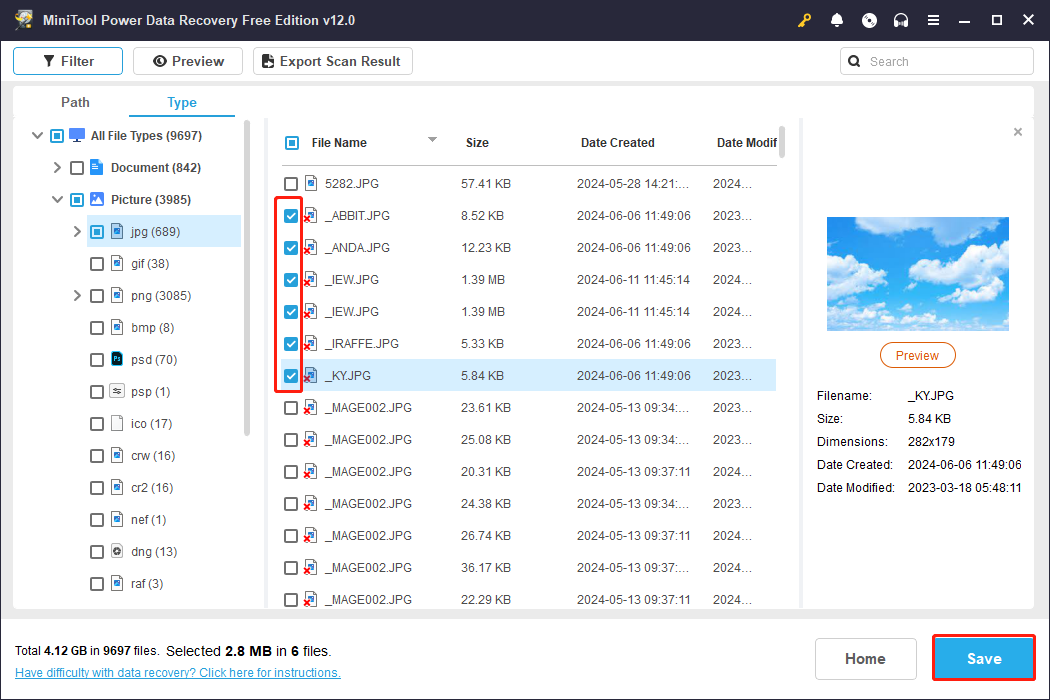
MiniTool Power Data Recovery Free enables you to restore 1GB of files for free. If you choose files that exceed the limit, you are unable to complete the data recovery process until update to an advanced edition. Since there are several editions for this software, you can visit this page to check the functions and limitations of those editions and choose one that suits your situation best.
What Errors Can Indicate a Broken USB Stick?
A broken USB stick does not always mean that the hardware is physically damaged. The following messages often indicate logical, file system, or I/O problems that may be repairable:
- “Access is denied”;
- “Please insert disk into removable disk”;
- “The file or directory is corrupted and unreadable”;
- “The parameter is incorrect”;
- “You need to format the disk in drive * before you can use it. Do you want to format it”;
- “The request could not be performed because of an I/O device error”;
- “The volume does not contain a recognized file system. Please make sure that all required file system drivers are loaded and that the volume is not corrupted”.
Click here to see how to solve a volume that does not contain a recognized file system error.
How to Fix Logical Problems on a Broken USB Stick
After recovering important files, you can try the following methods to repair logical errors on the USB stick. These methods are most suitable when the drive is still detected by Windows and does not have obvious physical damage.
Method 1. Run CHKDSK to Check File System Errors
Preparations: plug in the broken USB stick to the computer; afterward, start “cmd.exe“ by following ways.
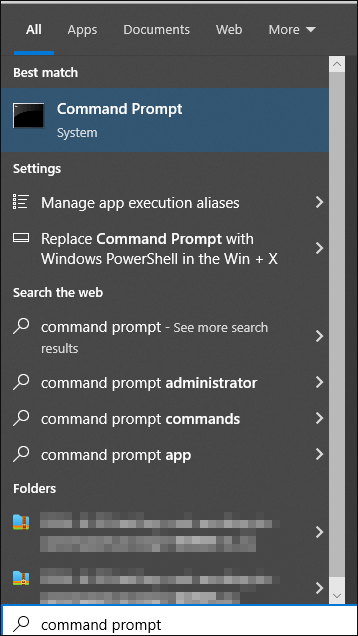
a). click on the Search button > type command prompt or cmd into the Search textbox > choose Command Prompt from the search results.
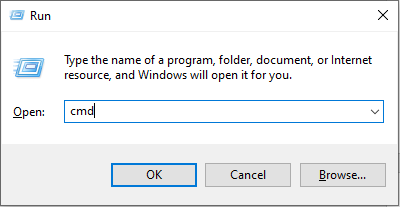
b). press Win + R on the keyboard at the same time to open the Run window > type cmd or cmd.exe into the textbox > click on the OK button or press Enter on the keyboard.
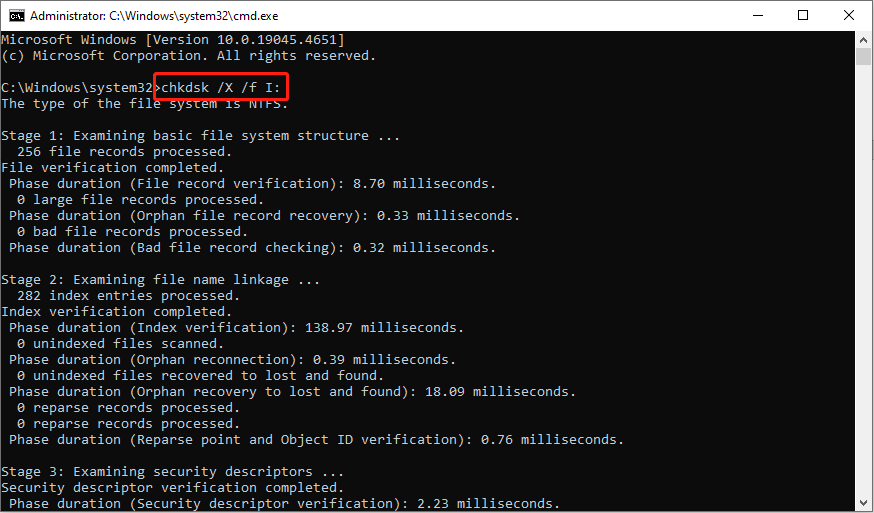
Repair steps: type chkdsk /X /f *: or chkdsk *: /f into the Command Prompt window; then, you only need to wait for the result (if any problem is found on the USB stick, Windows will fix it automatically).
“*” stands for the drive letter of your USB stick; if you don’t know it clearly, you may go to Disk Management to confirm first.
Method 2. Use Windows Error Checking
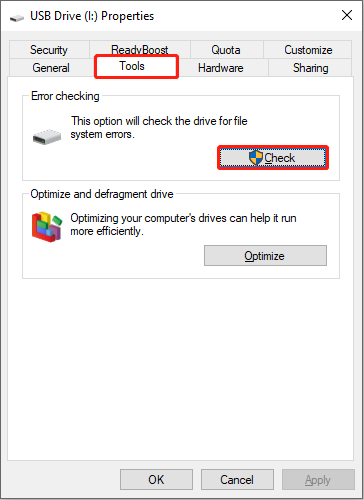
Windows includes an Error Checking tool that can scan a USB stick for file system errors. In File Explorer, right-click the USB drive, select Properties, go to the Tools tab, and click Check. Follow the on-screen instructions to scan and repair the drive..
Believe it or not, this work can also be done easily with the help of “Check File System” function in MiniTool Partition Wizard.
How to Fix a Physically Damaged USB Stick
If the USB stick is not detected after trying different USB ports and computers, or its connector is bent, loose, or broken, the problem may be physical.
If the drive contains important data, do not attempt soldering or disassembly before considering professional recovery, as improper repairs can cause additional damage.
If the files are not so important or you have backups for them, you can try the following actions.
Step 1: prepare the following things you need for repairing a broken flash drive connector.
- Precision soldering iron with solder and flux
- Old USB cable you discard
- Wire cutters or strippers
- Small flathead screwdriver
- Magnifying glass (or you can use a jeweler’s loop to replace it)
Step 2: open the case of the broken USB device carefully with a flathead screwdriver.
Step 3: use a magnifying glass to visually examine the circuit board (PCB) and solder pads.
If you find the PCB is damaged or the solder pads are lifted during the examination, you will probably need help from professionals; if not, you could continue.
Step 4: if you find the pads are intact, please do the following things.
- Use the wire cutters to cut off the female end of the USB cable.
- Use the wire strippers to expose about 0.25 inch (0.6 cm) of each of the four wires you can see inside the cable.
- Apply some solder to each wire and carefully solder those four wires to four solder pads.
- Connect the other end of this USB cable to your computer to see what happens.
If it works, congratulations! Just clap for yourself; if it still fails, please seek other ways.
When Should You Use Professional USB File Recovery?
Consider professional USB file recovery if the USB stick is not detected on any computer, has a severely damaged connector or circuit board, or contains important files that cannot be replaced.
Repeatedly connecting, disassembling, or attempting DIY repairs on a physically damaged USB drive may worsen the damage.
How to Prevent Further Data Loss from a Broken USB Stick
Once a USB stick starts showing errors, continued use can increase the risk of file loss. Follow these basic precautions before attempting USB repair or recovery:
- Stop saving new files to the USB drive.
- Do not format the drive before recovering important files.
- Avoid repeated reconnection if the USB connector is physically damaged.
- Keep important files backed up in another location.
Conclusion
To fix a broken USB stick safely, first determine whether the problem is logical or physical.
If the drive is still detected and contains important files, recover data before attempting repairs. You can then use tools such as Windows Error Checking or CHKDSK to fix logical errors.
For severe physical damage or an undetected USB stick with critical data, professional USB file recovery may be the safer choice.
If you encounter issues while using MiniTool software, feel free to contact us via [email protected].
User Comments :