

Deleted files can often be undeleted if they have not been overwritten by new data. This guide explains how to undelete files in Windows 10/11 using Ctrl + Z, Recycle Bin, backups, and professional data recovery software. Follow these methods to recover deleted files quickly and safely.
What Happens When Your Files Are Deleted
When you delete a file in Windows, it is not always removed immediately from your storage device. In many cases, deleted files can still be recovered as long as the storage space they occupy has not been overwritten by new data.
Files deleted from your computer’s internal hard drives are sent to the Recycle Bin, which is a temporary location for deleted files. In contrast, files deleted using the Shift + Delete key combination or files deleted from a USB flash drive are permanently deleted from your computer and are not stored in the Recycle Bin.
Even in these situations, the deleted files are usually not erased immediately. Windows marks the storage space as available for new data, but the original file contents may remain until new files overwrite them.
Therefore, you may still be able to recover deleted files in Windows 10/11 using appropriate methods.

How to Undelete Files in Windows 10/11
Method 1. Undo the Delete Operation with Ctrl + Z
Ctrl + Z is used to cancel the most recent operation, such as deleting a file, editing a document, and more. Upon deleting a file, you can press the Ctrl + Z key combination to undelete it. This is the fastest way for deleted data restoration.
However, this shortcut does not always work, especially if you have restarted your computer or the files have been permanently deleted.
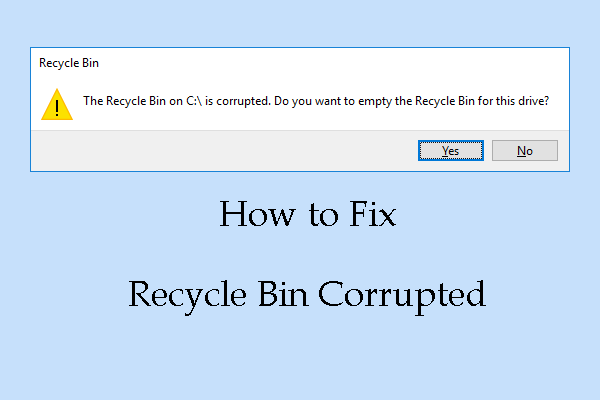
Method 2. Check the Recycle Bin
If the Ctrl + Z key combination does not undelete the files, you may need to open the Recycle Bin and check if the deleted items are there. If yes, you can simply drag and drop them to your desktop or another preferred location.
Alternatively, you can select the needed items, then right-click on them, and choose the Restore button in the context menu to put them into their original locations.

The Recycle Bin works only when:
- The file was deleted normally.
- The Recycle Bin has not been emptied.
- The file was not deleted using Shift + Delete.
Method 3. Recover Files from a Backup
If the ways mentioned above cannot help you restore the deleted files, you may need to recall whether you have backed up the deleted data.
- If you transferred the files to an external disk or another computer, you can transfer them back.
- Files uploaded to cloud storage can be downloaded to your local disk by logging into your account.
- For data backup performed with professional backup software, you need to use the corresponding backup tool to restore the backups.
Moreover, files backed up with Windows’ built-in backup tool – File History can also be restored easily.
Method 4. Utilize MiniTool Power Data Recovery
If, unfortunately, all the methods above fail to undelete files in Windows, you need to use data recovery software to rescue your data.
MiniTool Power Data Recovery is designed for recovering permanently deleted files on Windows 11/10/8.1/8.
- What data deletion scenarios is this file restore software suitable for? It has strong adaptability to almost all file deletion situations, such as Shift + Delete deletion, Windows Defender deletion, virus attack deletion, CHKDSK deletion, and more.
- What files can this MiniTool file restore tool recover? It works great on diverse file type recovery, including photo recovery, music file recovery, Office file recovery, and so on.
- What kind of disks does this software support to recover deleted data from? It excels at recovering files from HDDs, SSDs, USB flash drives, SD cards, CDs/DVDs, and other types of file storage media.
The free edition provides you with 1 GB of free data recovery capacity.
MiniTool Power Data Recovery FreeClick to Download100%Clean & Safe
How to restore permanently deleted files in Windows 10/11 with MiniTool Power Data Recovery? Follow the steps below.
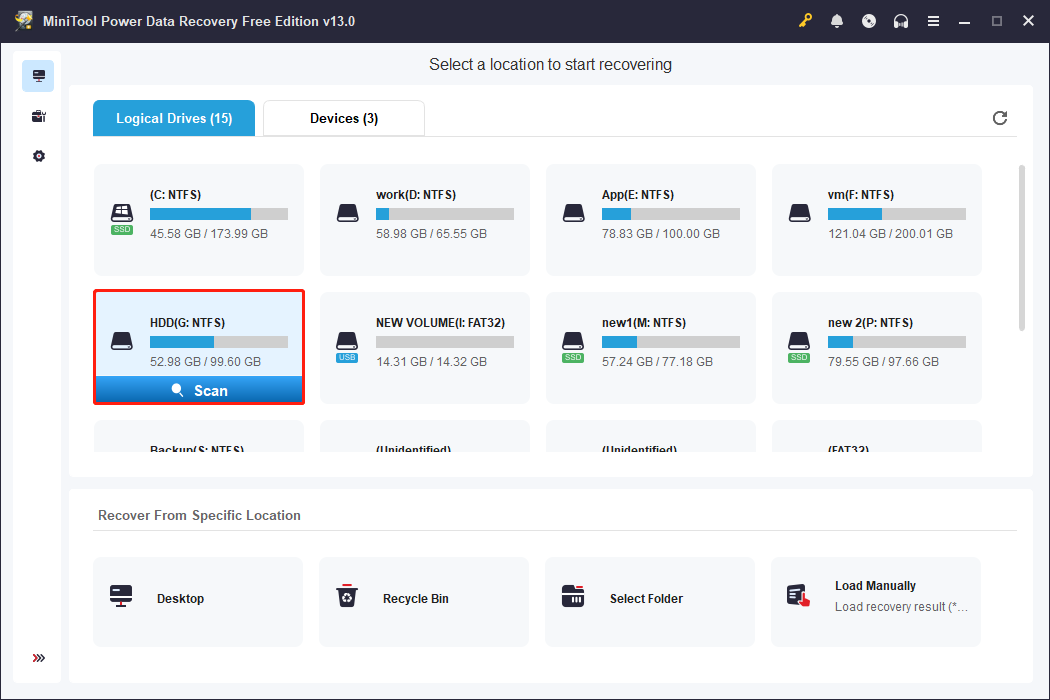
Step 1. Launch MiniTool Power Data Recovery Free and you will see its main interface where all disk partitions are displayed. Now what you should do is find the partition where the file deletion happens according to the drive letter or other disk information and click Scan.
It is worth noting that this software features three quick scan and recovery options, allowing you to scan the Desktop, the Recycle Bin, and a specific folder individually for deleted files.
The scanning progress and remaining time will be displayed in the lower-left corner of the scanning page. As long as the scanning progress continues to update, it is recommended that you wait patiently until the scan ends automatically to obtain the optimal scanning results.
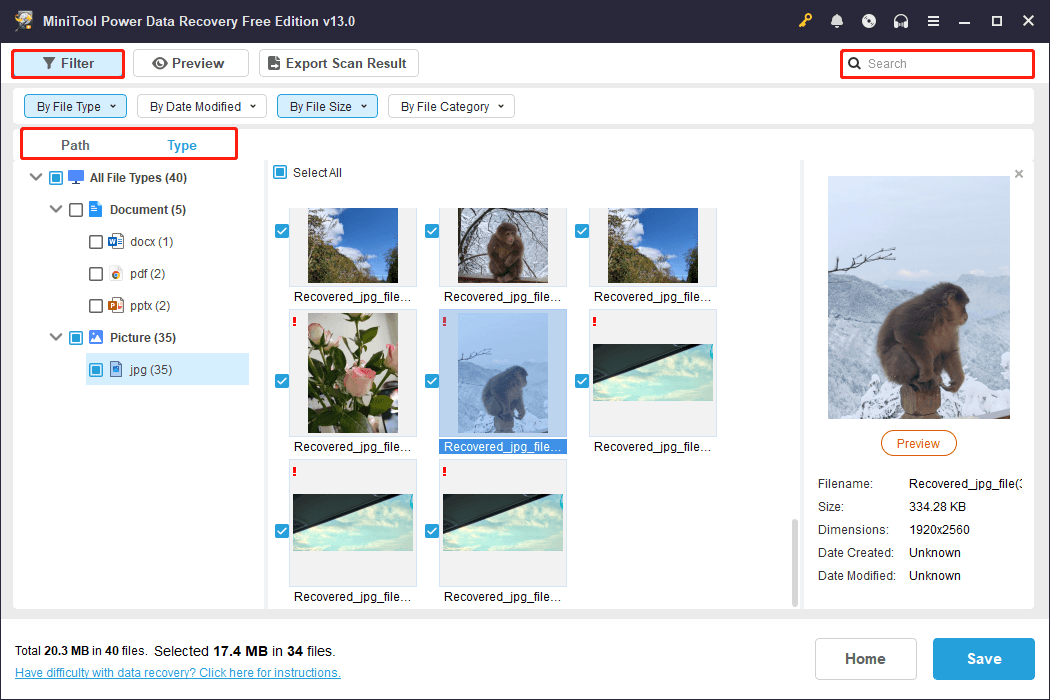
Step 2. Once the scan is completed, you can expand the folders under Path to find the items you need to recover. After locating a needed file, you need to tick the checkbox next to it.
This file recovery software provides you with the following useful features to simplify the file discovery process.
- Filter: It helps you filter displayed files by file type, date modified, file size, and file category. You can customize these filtering rules according to your needs.
- Search: It helps you find a specific file/folder by typing file name keywords in the box and pressing Enter on your keyboard.
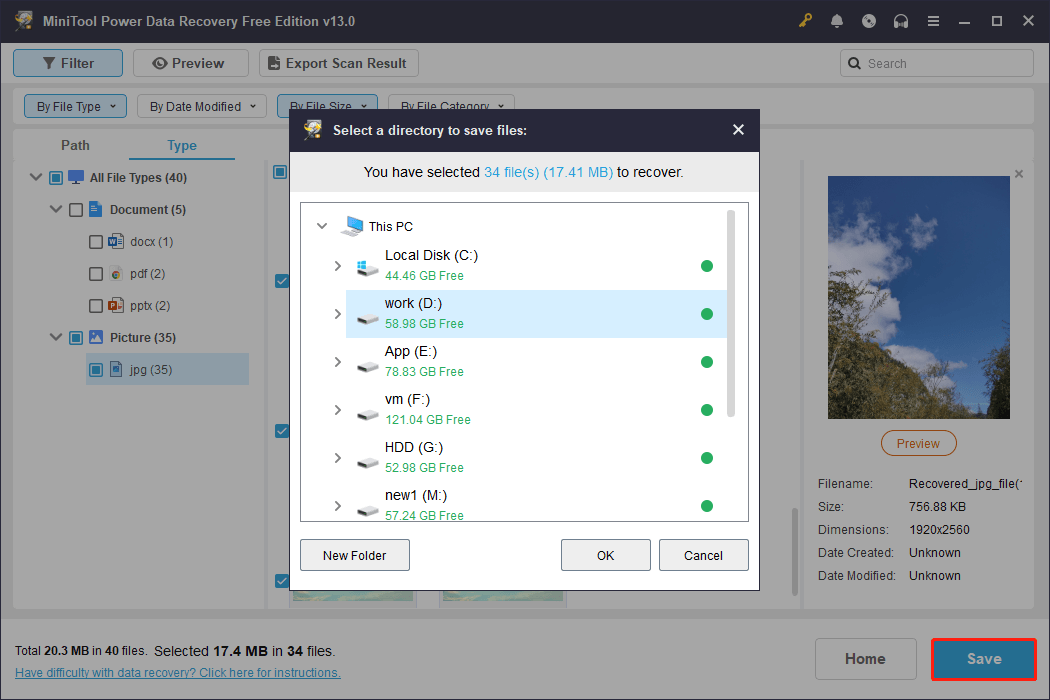
Step 3. Select all required files and click the Save button to store them. You should save the recovered files to the hard drive separate from the one data deletion happens to avoid data overwriting.
What Measures Can You Take to Protect Your Files
Till now, all methods to undelete files in Windows have been explained. It is true that choosing the right method after file loss is important to increase the success rate of file recovery. However, the importance of taking appropriate measures to prevent file loss cannot be ignored.
In the next part, we will introduce some tips to avoid files from being deleted/lost permanently.
Method 1. Make a Regular Data Backup
Prevention is better than cure. Regardless of the reasons why your files were deleted, having complete and continuously updated backups is always the most reliable means of secure data recovery.
Depending on your preference, there are a variety of simple and convenient ways to back up your data.
For instance, you can purchase an external hard disk, and then copy and paste the files you want to back up to that disk for data protection.
Also, you can choose a reliable and cost-effective cloud backup service, and then upload important data to cloud storage space so that your files will be stored on the cloud server.
Additionally, you can back up files with Windows built-in backup tools like File History.
For users who need automatic and scheduled backups, backup software such as MiniTool ShadowMaker can help create file backups, disk backups, and system backups. It supports full, incremental, and differential backup methods to manage storage usage efficiently.
MiniTool ShadowMaker TrialClick to Download100%Clean & Safe
Method 2. Encrypt Your Hard Disk
Sometimes your files may be deleted by someone else who uses your computer. Encrypting the hard disk where important files are stored is a good choice to prevent data loss due to unauthorized access.
The BitLocker feature that comes with Windows can help encrypt the entire disk so that even if your computer is stolen, other users without the password cannot access or delete your files.
MiniTool Partition Wizard integrates a BitLocker Manager feature that allows you to enable or disable BitLocker, as well as lock or unlock drives easily without restarting Windows.
MiniTool Partition Wizard FreeClick to Download100%Clean & Safe
Method 3. Enable File Deletion Confirmation
To prevent accidental deletion of your files, you can also turn on the file deletion confirmation function. Then, when you try to delete a file, the Windows system will pop up a dialog box asking you to confirm the deletion operation. How to enable this feature? Here are the steps:
Step 1. On your desktop, right-click the Recycle Bin shortcut and choose Properties.
Step 2. In the new window, tick the Display delete confirmation dialog option.

Step 3. Click Apply > OK to save this change.
Other Tips
There are other tips to prevent your files from being lost permanently:
- Check the disk for errors regularly.
- Always enable Windows Defender to prevent viruses from attacking your computer and causing data loss.
- Keep your Windows system up to date.
- Do not use your hard drives in extreme environments.
- …

The End
To sum up, this tutorial introduces how to undelete files in Windows, including using the Ctrl + Z key combination, the Recycle Bin, and MiniTool Power Data Recovery. Also, it offers some useful precautionary measures for data protection.
Should you need any help with MiniTool software, please feel free to send an email to [email protected] for assistance.
About The Author

Position: Columnist
Shirley holds a bachelor’s degree in English and has been an editor at the MiniTool Team for many years. She specializes in IT-related content, with a focus on data recovery, file backup, disk management, and other technical topics. She is committed to delivering clear, accurate, and practical solutions to help users resolve common computer issues.
User Comments :