

Accidentally deleting important files in Windows 10/11 does not always mean they are permanently lost. In many cases, you can recover deleted files in Windows 10/11 by using built-in file restore features, backup options, or professional file recovery software.
Quick Answer: Can You Recover Deleted Files in Windows 10
Yes, you can often recover deleted files in Windows 10/11. When you delete a file, Windows usually does not immediately erase all of its data. Until the space the file occupied is overwritten by new data, recovery may still be possible.
However, you should stop using the affected drive as soon as possible after data loss. Creating new files, installing programs, or downloading data may overwrite the deleted files and reduce the chance of successful recovery.
The recovery method depends on how the files were deleted:
- Files deleted normally may still be available in the Recycle Bin.
- Files removed from the Recycle Bin may be recovered from backups or previous versions.
- Files permanently removed may require data recovery software.
This guide explains how to undelete files in Windows 10/11 step by step.
How to Recover Deleted Files in Windows 10/11
Method 1. Recover Deleted Files from Recycle Bin
The first place to check after accidentally deleting files in Windows 10 is the Recycle Bin.
When you press the Delete key or choose Delete from the right-click menu, Windows usually moves files to the Recycle Bin instead of erasing them permanently.
You should do the following things to restore files from the Recycle Bin in Windows 10:
- Open the Recycle Bin in Windows 10.
- Find the files and folders you need to restore in the Recycle Bin.
- Select the files & folders and right-click on them.
- Choose the “Restore” option from the right-click menu.
The files will be restored to their original locations.

Method 2. Recover Deleted Files Using File History
Windows 10 includes a built-in backup feature called File History. If you enabled File History before losing your files, you may be able to restore previous copies of the deleted files.
How to restore deleted files with File History:
Step 1. Open the Control Panel and navigate to System and Security > File History > Restore personal files.
Step 2. Select the files you want to recover and click the green Restore button. To save the files to another location, right-click the Restore button and choose Restore to.
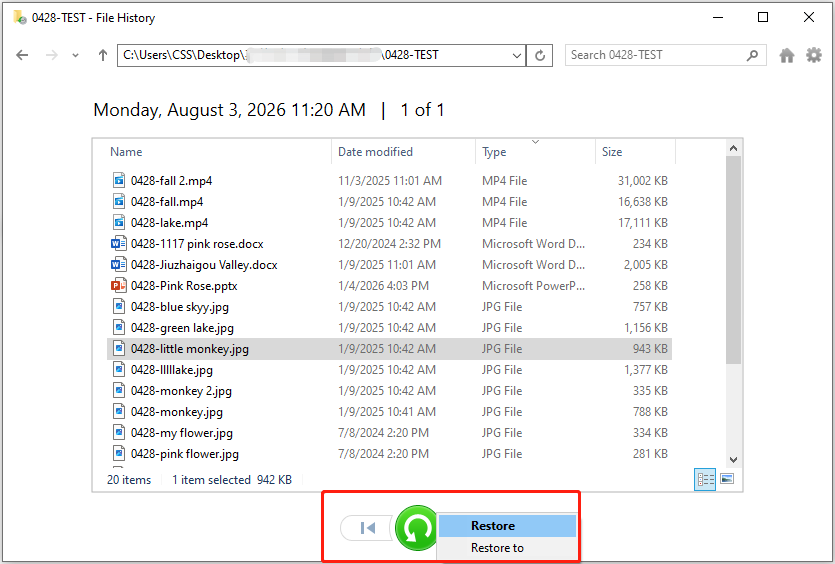
File History is useful when files were deleted or modified but previous backups are available. If File History was never enabled, you will not find any previous versions of your files.

Method 3. Recover Permanently Deleted Files with Data Recovery Software
If you deleted files using Shift + Delete, emptied the Recycle Bin, or lost files without backups, built-in Windows tools may not be enough.
In this situation, you need to use professional Windows file recovery software to scan the storage device and locate recoverable files.
MiniTool Power Data Recovery is designed to recover deleted files from various storage devices and data loss situations, including:
- Accidentally deleted files
- Empty Recycle Bin recovery
- Shift + Delete file recovery
- File recovery on formatted, lost, or corrupted partitions
It supports recovering different types of files, including documents, photos, videos, audio files, and other common file types.
Get the free edition and use it to recover 1 GB of files for free.
MiniTool Power Data Recovery FreeClick to Download100%Clean & Safe
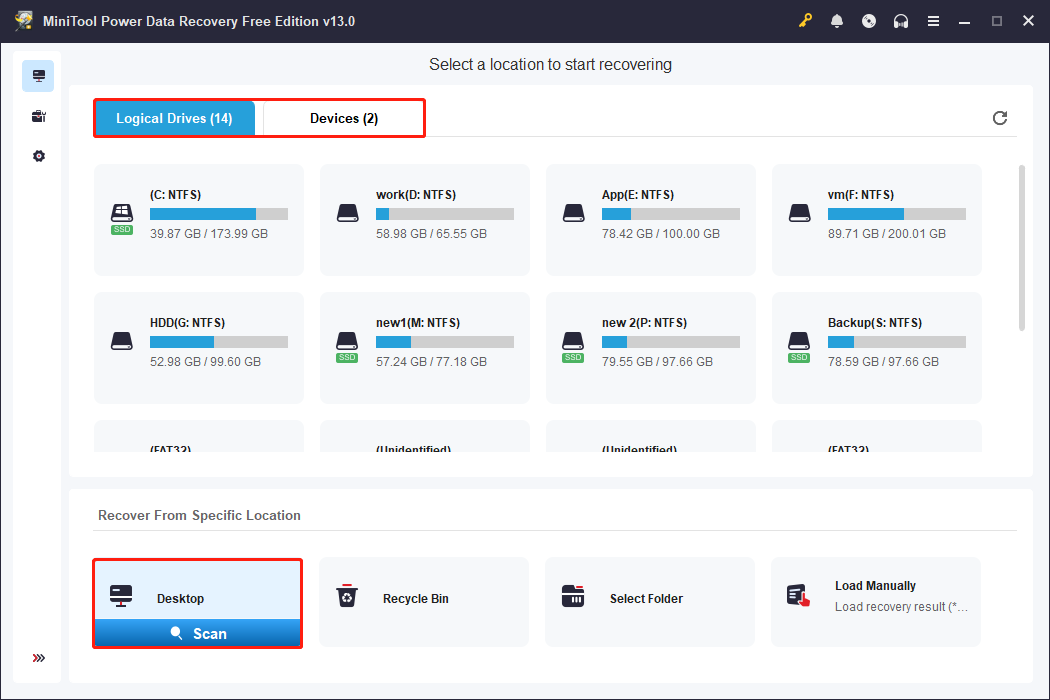
Step 1. Run MiniTool Power Data Recovery. When you see the main window of this software, you have three options to scan for lost/deleted files.
- Logical Drives: You are under this tab by default. Here, all partitions on your disks are displayed with the storage space and other disk information. Select the target partition where data loss happens and click Scan.
- Recover From Specific Location: Under this section, you can choose to scan the Desktop, the Recycle Bin, or a specific folder individually to shorten scanning time.
- Devices: Under this tab, you can select to scan a whole disk instead of an individual partition for deleted files.
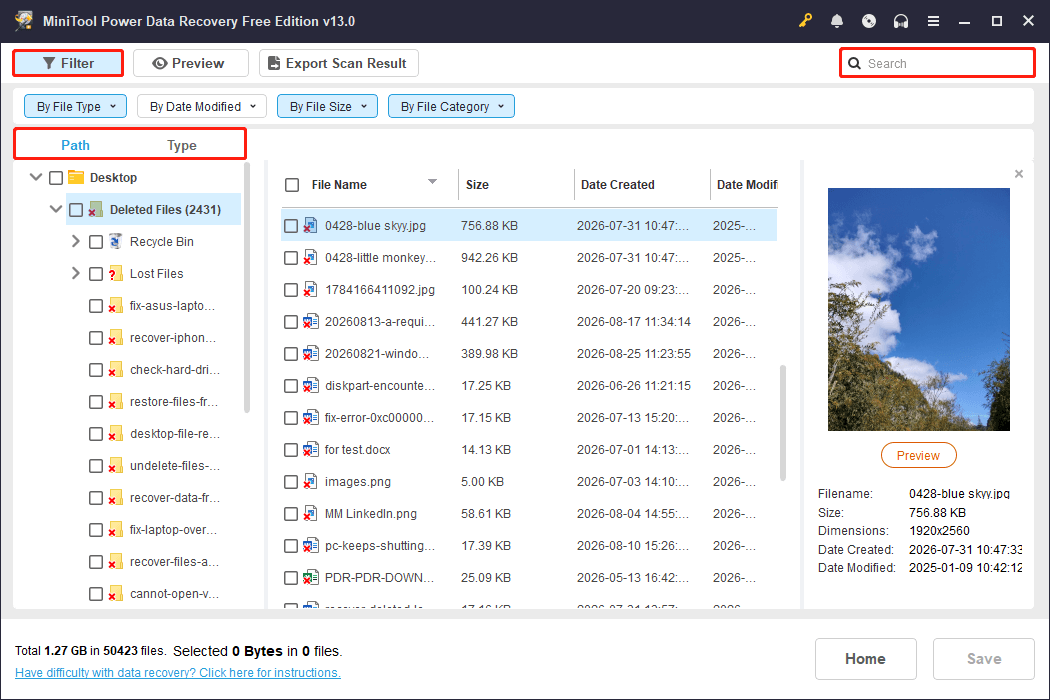
Step 2. When the scan has been finished, all the files and folders found by the software will be listed by file path by default. You only need to expand each folder to browse the found data and check the required ones. Also, you can switch to the Type tab to view files by file type.
You can also use the Filter and Search features to find required files faster.
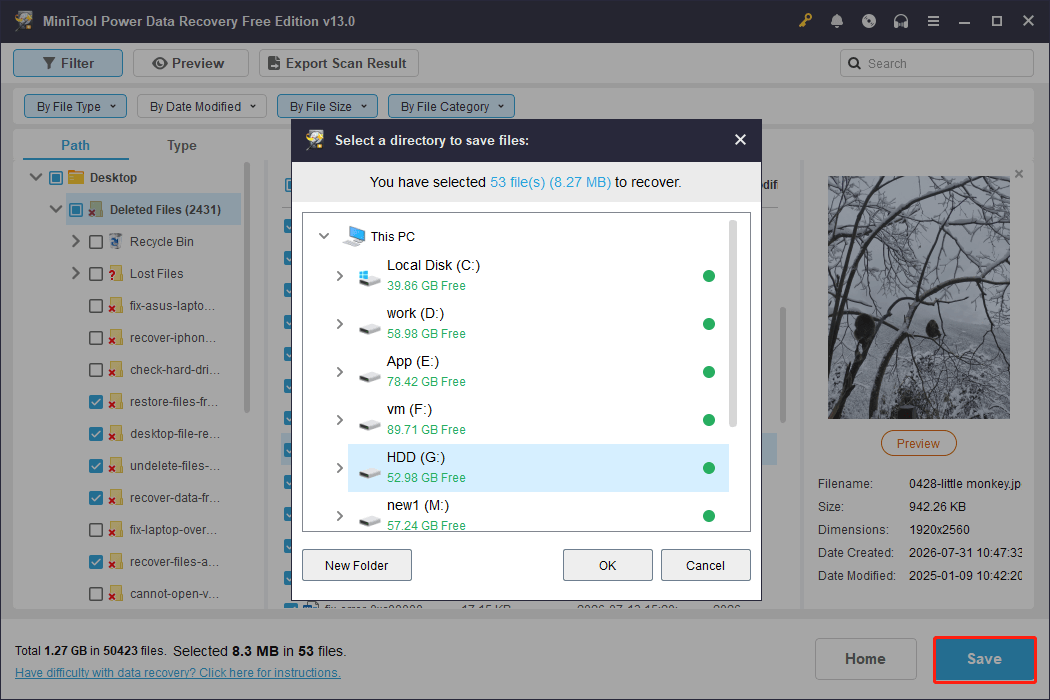
Step 3. Check all needed items, click Save, and then choose an appropriate location separate from the original one to store the recovered files.
Why Can Deleted Files Be Recovered in Windows
Many users wonder why permanently deleted files can still be recovered.
When a file is stored on a drive, Windows keeps information about the file and the actual file data. After deletion, Windows usually removes the file reference and marks the storage space as available for new data.
That is to say, the so-called permanently deleted file is not cleared from the computer; it’s only marked as deleted and set to be unrecognized. When new data are written into the hard disk, the old file may be overwritten.

How to Prevent Data Loss in Windows
Although deleted files can sometimes be recovered, preventing data loss is always better than recovery. Follow these practical tips to protect your files:
1. Keep Multiple Copies of Your Files
Do not store important files in only one location. Keep at least one additional copy on another drive or cloud storage. A 3-2-1 backup strategy provides better protection against accidental deletion, hardware failure, and virus infection.
2. Enable File History or Data Backup Tools
Windows File History can automatically save previous versions of your files. Enable it for important folders such as Documents, Desktop, and Pictures so you can restore files when needed.
In addition, you can use Windows backup software like MiniTool ShadowMaker to back up important files to an external hard drive.
MiniTool ShadowMaker TrialClick to Download100%Clean & Safe
3. Avoid Writing New Data After Accidental Deletion
If you delete important files by mistake, stop using the drive immediately. New data may overwrite deleted files and make recovery impossible.
Bottom Line
There are several methods to recover deleted files in Windows 10/11. Start with simple solutions such as checking the Recycle Bin or restoring from File History. If the files were permanently deleted and no backup is available, MiniTool Power Data Recovery can help.
The most important step after accidental deletion is to stop using the affected drive as soon as possible. The less new data written to the device, the higher the chance of successful recovery.
Should you have any questions about MiniTool products, do not hesitate to contact the tech support team at [email protected].
Windows Data Recovery FAQ
If the file is permanently deleted, use data recovery tools to scan your drive. There is no single folder in Windows where all permanently deleted files are stored.
1. Normal deletion: Files are usually moved to the Recycle Bin.
2. Shift + Delete deletion: Files bypass the Recycle Bin and are marked as deleted.
3. After emptying the Recycle Bin: Files are removed from the file system, but the actual data may remain until overwritten.
This keyboard shortcut works in many Windows applications, such as File Explorer or Desktop.
About The Author

Position: Columnist
Shirley holds a bachelor’s degree in English and has been an editor at the MiniTool Team for many years. She specializes in IT-related content, with a focus on data recovery, file backup, disk management, and other technical topics. She is committed to delivering clear, accurate, and practical solutions to help users resolve common computer issues.
User Comments :