

A Windows black screen after sleep is usually caused by graphics driver issues, power settings, fast startup, or hardware conflicts. This guide explains why your PC won’t wake up from sleep and provides practical solutions to fix the problem without losing data.
Quick Answer: Black Screen After Sleep Windows 11/10
A Windows black screen after sleep is usually caused by graphics driver problems, power setting conflicts, outdated BIOS, or corrupted system files.
To fix this issue, you can try restarting the graphics driver, disabling Fast Startup, updating drivers, running system repair tools, or updating the BIOS.
If your computer still cannot wake up and fails to boot, use MiniTool Power Data Recovery to recover important files from the unbootable computer.
Experiencing a black screen after waking your computer from sleep can be frustrating. The issue can happen due to several hardware, driver, or Windows configuration problems.
Part 1. Why Does Windows Show a Black Screen After Sleep
What is the culprit of the situation that your computer won’t wake up from sleep? Before carrying out methods, you may want to dig out the actual cause of this problem. Here we list some possible reasons:
- Loose cable connection or device interference;
- Outdated or corrupted graphics driver;
- Enabled fast startup and hibernate services;
- Outdated BIOS of the computer;
- Corrupted system files;
- Other system or hardware-related issues.
Part 2. Quick Checks to Fix Windows Black Screen After Sleep
When your computer won’t wake up from sleep, you can do some simple checks to try to boot it up. Here are some suggestions:
- Check the cable connection: This should be the first examination. You should check whether the display cable is well connected. Additionally, connect the power cable to your computer in case the computer runs out of power.
- Remove external connected devices: If there are any connected external devices, you are suggested to remove them. Some external devices can interrupt the computer bootup process. You can disconnect them and try to boot up the computer.
- Force shutdown and restart: After the above two operations, attempt to force shutdown and restart the computer. Press and hold the Power button for seconds to turn off the computer completely. Then, wait for a few minutes and press the Power button to restart the PC.
Part 3. How to Fix Windows Black Screen After Sleep
If your computer is able to boot up properly with the above simple checks, you can work with the following methods to fix the computer black screen after waking up from sleep issue. When your computer fails to boot up, please jump to Part 4 to recover your files from the unbootable computer and seek help from the computer repair center.
Way 1. Restart Graphics Driver
When Windows resumes from sleep mode, the graphics driver may fail to respond correctly, causing the display to remain black. You can restart the graphics driver using a simple keyboard shortcut.
Step 1. Press Win + Ctrl + Shift + B on your keyboard.
Step 2. Wait for a few seconds. You may hear a beep sound, and the screen may flicker briefly while Windows restarts the graphics driver.
Step 3. Check whether your monitor displays the normal screen again.
If this method works temporarily but the problem happens repeatedly, consider updating or reinstalling the graphics driver to prevent the issue from happening again.
Way 2. Disable Fast Startup and Hibernate
If the Fast Startup mode is enabled on your computer, the computer will be put into Hibernation mode instead of shutting down completely for a quick startup. However, sometimes, this utility can cause computer bootup issues, such as a black screen after sleep. You can follow the next steps to disable Fast Startup and Hibernate mode to avoid such an error.
Step 1. Type Control Panel into the Windows search bar and press Enter to launch the Control Panel window.
Step 2. Head to Hardware and Sound > Power Options. Select the Choose what the power button does option in the left sidebar.
Step 3. Click Change settings that are currently unavailable.
Step 4. Under the Shutdown settings section, untick the Turn on fast startup (recommended) and Hibernate options.
Step 5. Click Save changes to make your option take effect.

Way 3. Upgrade the Graphics Driver
The screen stays black after hibernation due to the graphics driver, probably. An outdated or corrupted graphics driver can affect the computer performance. It is necessary to keep the graphics driver up to date. You can go to the Device Manager utility to check whether your graphics driver requires an update. Here is how to do it.
Step 1. Right-click on the Windows icon and choose Device Manager.
Step 2. Expand the Display adapters option to find your graphics driver.
Step 3. Right-click on the driver to choose Update driver from the context menu. In the popup window, choose Search automatically for drivers.
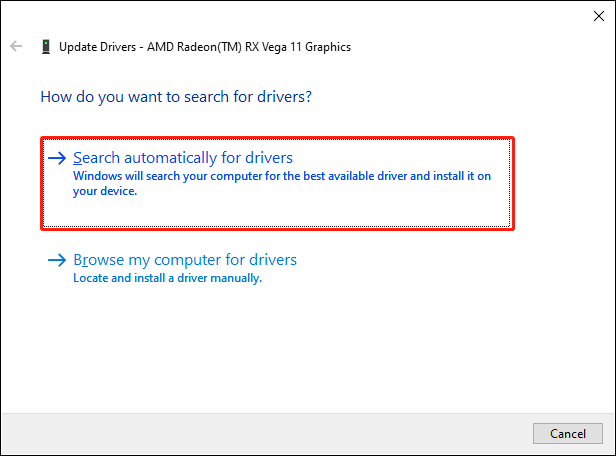
The computer will find and install the latest compatible driver for your computer automatically.
Way 4. Run System File Checker
Corrupted system files may also prevent Windows from waking up properly from sleep mode. In this case, you can use the built-in System File Checker (SFC) tool to scan and repair damaged Windows system files.
Step 1. Type Command Prompt into the Windows search box, right-click it, and select Run as administrator.
Step 2. In the Command Prompt window, type the following command and press Enter:
sfc /scannow
Step 3. Wait until the scanning process reaches 100% completion. Windows will automatically repair corrupted system files if any issues are detected.
Step 4. Restart your computer and check whether the Windows 11 black screen after sleep issue has been resolved.
Way 5. Disable the App Readiness Service
Some computer services may affect a computer’s performance, such as the App Readiness service. This service allows applications to get ready when the computer is going to boot up, but meanwhile, this service probably causes computer lagging, black screen, or other problems. If you have enabled this service, please disable it and check if it resolves the problem that the computer won’t wake up from sleep.
Step 1. Type Services into the Windows search bar and press Enter to launch the Services window.
Step 2. Look through the service list at the right pane to locate the App Readiness service.
Step 3. Right-click on it and choose Properties. Choose Disabled from the dropdown menu of the Startup type option.

Step 4. Click Apply > OK to activate your selection.
Way 6. Run the Power Troubleshooter
Apart from modifying Windows configurations, Windows also contains several troubleshooters that assist you in checking Windows issues. For instance, you can run the Power troubleshooter to detect and repair issues related to the power settings.
Step 1. Press Win + I to open Windows Settings.
Step 2. Navigate to Update & Security > Troubleshoot > Additional troubleshooters.
Step 3. Scroll down to find and select the Power option. Click Run the troubleshooter to start the detect and repair process.

Way 7. Update the BIOS
An outdated BIOS can sometimes cause compatibility issues between your computer hardware and Windows power management features, which may result in a black screen.
Updating the BIOS to the latest version provided by your computer manufacturer may help resolve these compatibility issues.
Before updating the BIOS, make sure your important files are backed up in case of unexpected failures.
After creating a backup, visit your computer manufacturer’s official website to download the latest BIOS version and follow the provided instructions to complete the update.
Part 4. Recover Data if Windows Cannot Wake Up After Sleep
If your computer still cannot boot into Windows normally, the priority should be protecting your important files.
You can use MiniTool Power Data Recovery to recover files from the unbootable computer before reinstalling Windows or performing further repairs.
MiniTool Power Data Recovery provides a bootable media feature that allows you to access the computer and recover files even when Windows cannot start normally.
Follow the steps below to recover your data:
Step 1. Create a bootable USB drive with MiniTool Power Data Recovery.
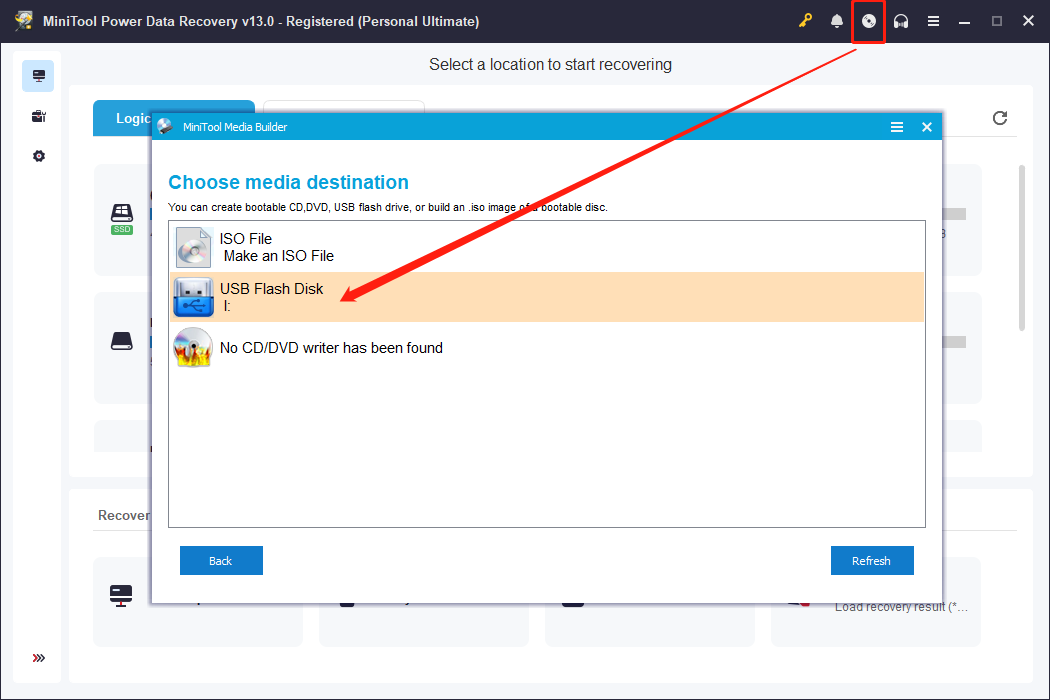
Use another working computer to install and launch MiniTool Power Data Recovery. Then click the bootable media icon to create a bootable USB drive.
Step 2. Boot the problematic computer from the USB drive.
Connect the created bootable media to the computer with the black screen issue. Enter the BIOS and change the boot order to boot from the USB drive.
Step 3. Scan and recover files.
MiniTool Power Data Recovery will launch automatically. On its main interface, select the drive from which you need to recover files and click Scan.
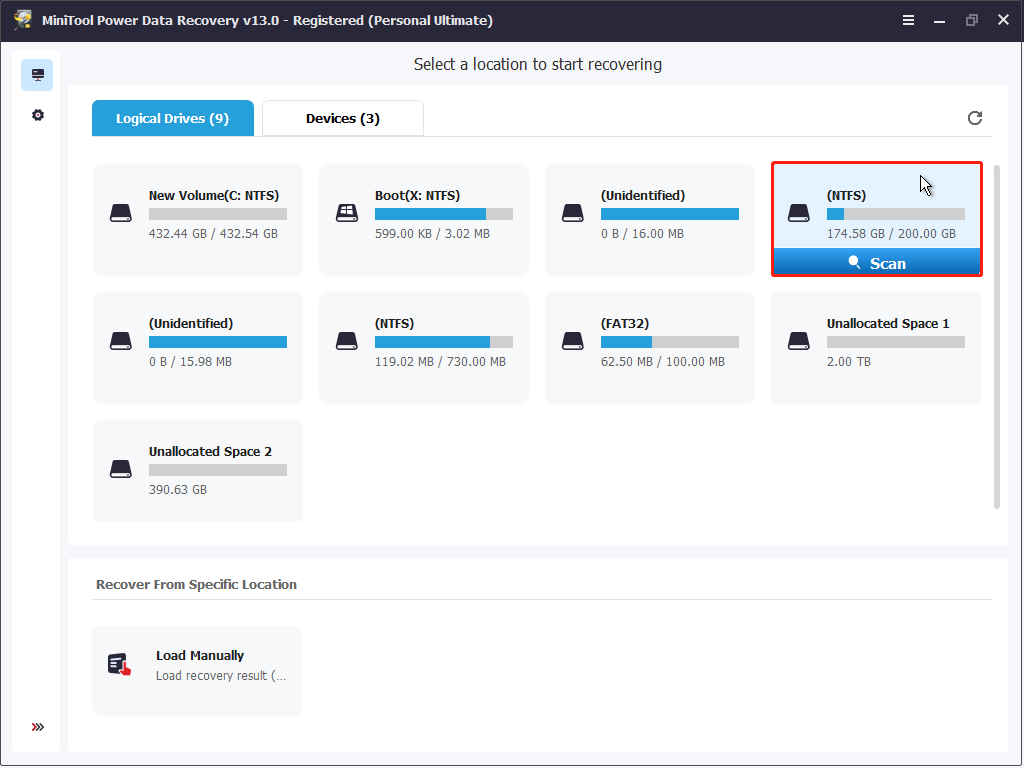
When the scan ends, look through the file list on the result page. By default, all files are displayed under the Path tab. You can change to the Type tab to discover files according to their types.
Apart from the two functions, the Filter and Search functions assist in locating files as well by setting filter criteria or searching with specific file names.
Select all required files and click Save to store them to a removable drive.

Part 5. Final Words
After reading this post, you should know how to fix and prevent the Windows black screen after sleep issue. Additionally, it is necessary to recover data from the computer, especially when the computer fails to boot up after sleep.
If you have any problem using MiniTool file recovery software, please feel free to contact us by email at [email protected].
About The Author

Position: Columnist
Shirley holds a bachelor’s degree in English and has been an editor at the MiniTool Team for many years. She specializes in IT-related content, with a focus on data recovery, file backup, disk management, and other technical topics. She is committed to delivering clear, accurate, and practical solutions to help users resolve common computer issues.
User Comments :