

Permanently deleted files on Windows are not always gone immediately. In many cases, file recovery is still possible before the deleted data is overwritten or cleared by SSD TRIM. This guide explains when permanently deleted files can be recovered and the best methods to restore them safely.
Can Permanently Deleted Files Be Recovered
Yes. In many cases, permanently deleted files can still be recovered if they haven’t been overwritten by new data or if a backup is available.
Deleted data recovery is usually more successful when:
- The files were deleted recently.
- The drive is an HDD instead of an SSD with TRIM enabled.
- The storage device has not been heavily used after deletion.
- Backups or shadow copies are available.
However, data recovery may become impossible if the deleted sectors are overwritten or if SSD TRIM has already erased the data blocks.What Happens When Files Are Permanently Deleted?
When you permanently delete a file in Windows:
- The file entry is removed from the file system index.
- The sectors that were occupied by the file are marked as available for new data.
- The actual data remains temporarily on the disk before overwriting.
- The system may overwrite these sectors (in part or in whole) later with new data.
This is why recovery is sometimes possible, especially if the disk has not been reused heavily.
When Permanent File Recovery Is Possible
Permanently deleted files are more likely to be recovered in the following situations:
- The deletion happened recently.
- The storage drive has not been heavily used after deletion.
- The file was stored on an HDD (hard disk drive).
- No new files have overwritten the original data blocks.
- Backup or shadow copy is available.
In these cases, data recovery software may still be able to reconstruct the deleted files to make them recoverable.
When Permanent File Recovery Is Not Possible
In the following cases, permanently deleted files cannot be recovered at all:
- The deleted data has been overwritten by new files.
- The drive uses SSD with TRIM enabled and garbage collection has already cleared the blocks.
- Secure erase or full format has been performed on the drive.
- The storage device is physically damaged.
That is to say, once data is overwritten or permanently cleared at the hardware level, file recovery is no longer feasible.
Why Deleted Files on an SSD Are Harder to Recover
Data recovery on SSDs is significantly more difficult than on HDDs. This is mainly due to a feature called TRIM.
When a file is deleted on an SSD:
- The system marks the data blocks as no longer needed.
- The SSD firmware actively clears those blocks in the background.
- This process improves performance but reduces recovery chances.
Because of this, permanently deleted files on SSDs are often unrecoverable shortly after deletion.
What to Do Immediately After Permanent Deletion
To maximize the chances of data recovery, it is important to act quickly. You should:
- Stop using the drive immediately.
- Avoid saving news files on that drive.
- Do not download and install data recovery software onto the affected drive.
- Disconnect external storage if possible.
- Start file recovery as soon as possible.
The less the drive is used, the higher the chance of successful recovery.
Best Approaches to Recover Permanently Deleted Files
There are several common methods to recover permanently deleted files on Windows.
Option 1. Check File History or Backup
If File History or Windows Backup has been enabled before the deletion, previous versions of files may still be available for restoration.
See these two guides to get your permanently deleted files back:
Option 2. Use Windows File Recovery
Microsoft provides a command-line tool that can scan storage devices for deleted files, especially useful for recently deleted data. It is called Windows File Recovery.
Here is the tutorial: How to Use Windows File Recovery Tool.
Option 3. Use Data Recovery Software
If no backup is available, data recovery software can scan the disk at a deeper level and attempt to recover deleted files from unallocated space.
Professional data recovery software may help scan unallocated sectors and reconstruct deleted files before they are overwritten.
Try MiniTool Power Data Recovery to recover permanently deleted videos, photos, documents, and other files on Windows.
Here is a guide on how to recover permanently deleted videos using this file recovery tool:
1. Download and install this software on your Windows PC.
MiniTool Power Data Recovery FreeClick to Download100%Clean & Safe
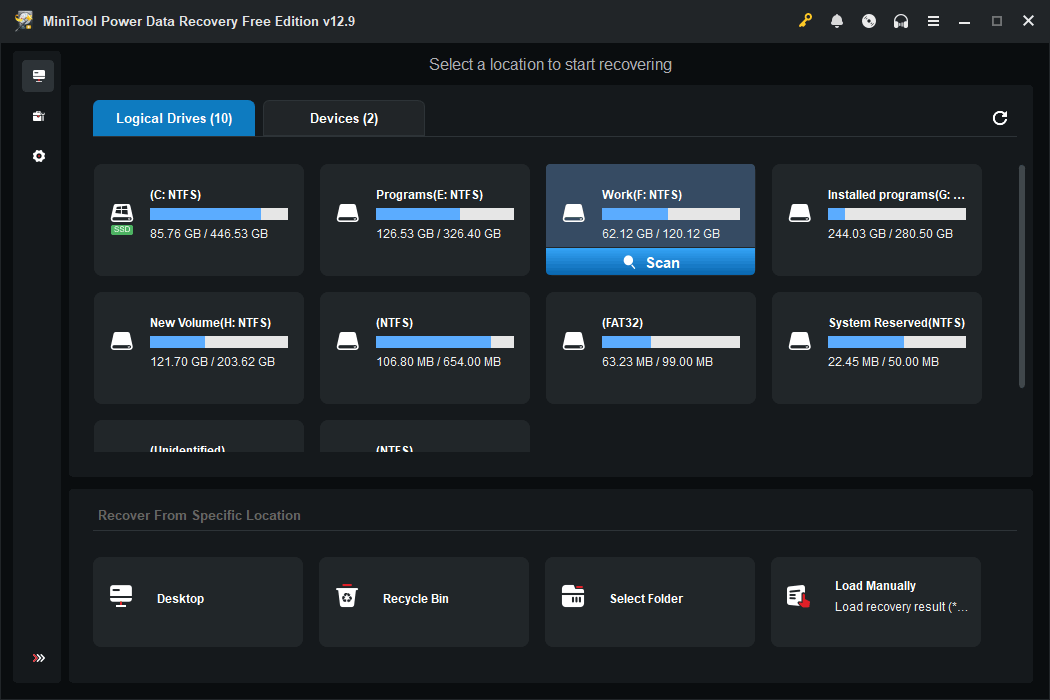
2. Launch the software. Then, find the drive you want to recover data from and scan it.
3. When the scanning ends, it’s time to find the desired files and preview them. Just do it.
If you want to recover certain types of files, go to Type to find them. Here, I want to restore some permanently deleted MP4 videos, so I go to Type > Audio & Video > mp4 to find them.
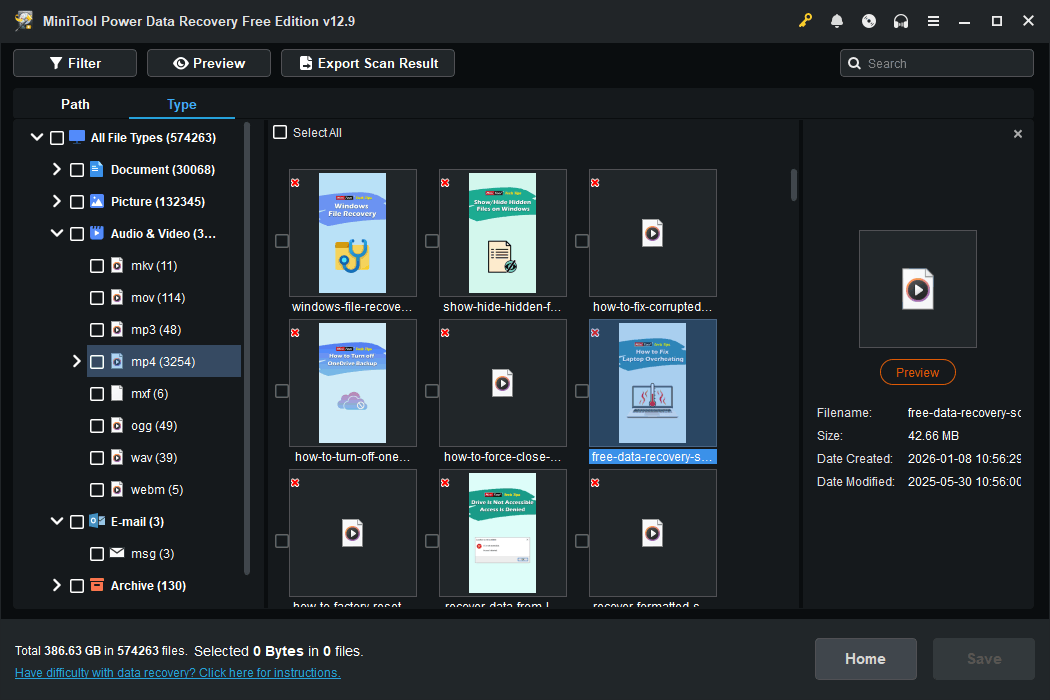
Double-click the target video to preview it. This helps to confirm whether it is the file you want to recover.

4. Select the video files and click Save. Then select a suitable location to save them.
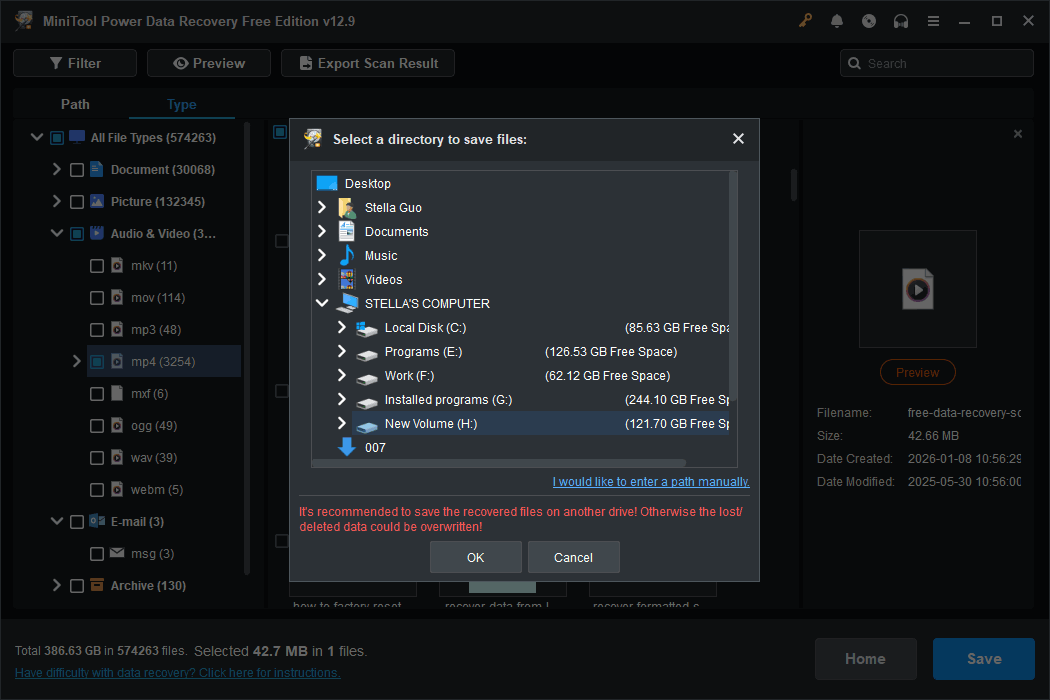
With the free edition of this file recovery tool, you can recover 1GB of files. However, this is enough to check if data recovery is possible. If you want to recover more files, you need to upgrade to an advanced edition.
Can Permanently Deleted Files Be Recovered from SSDs
Sometimes, but the success rate is usually lower than on traditional hard drives (HDD).
Most SSDs use a feature called TRIM, which automatically clears deleted data blocks in the background to improve performance. Once TRIM and garbage collection complete the cleanup process, the deleted files may no longer be recoverable.
SSD data recovery may still be possible in the following cases:
- The file deletion happened recently.
- The SSD has not processed TRIM yet.
- The SSD has not been heavily used after deletion.
- The files were deleted from an external SSD or an unsupported file system.
To improve data recovery chances, stop using the SSD immediately. Then, try the data recovery methods in this article to recover data.

Recover Permanently Deleted Files FAQs
Deleted files can remain recoverable for minutes, days, months, or even years, depending on how the device is used after deletion.
Data recovery chances are generally higher when:
1. No or fewer new files are written to the drive.
2. The deleted files were stored on an HDD.
3. The storage device has not been formatted or optimized.
On SSDs, deleted files may disappear much faster because of TRIM.
Windows users may recover deleted files using built-in features such as File History, Windows Backup, or Windows File Recovery. Some 3rd party data recovery software also provides free scanning or limited free recovery.
The success of free recovery methods depends on the extent of data loss and whether the deleted files have been overwritten.
Quick formatting usually removes file system records while leaving the actual data on the drive temporarily. In these cases, recovery software may still detect and restore some of them.
However, data recovery becomes much harder after a full format or continued use of the formatted drive.
Final Words
It is always possible to recover permanently deleted files on Windows, especially when the deleted data has not been overwritten. The key is to stop using the affected drive immediately and start data recovery as soon as possible.
Whether you use File History, Windows Backup, Windows File Recovery, or professional data recovery software, acting quickly can significantly improve the success rate. If you are unsure whether the deleted files are still recoverable, you can first use a free recovery tool to scan the drive and check the recovery results before taking further action.
If you still have questions about permanently deleted file recovery or cannot find the files you need, feel free to leave your questions in the comments section below for discussion. You can also contact us via email at [email protected] for further assistance.
About The Author

Position: Columnist
Stella is an experienced English editor with eight years of expertise in storage device data recovery. Her articles can help users effectively recover lost and deleted data and rescue files from unbootable PCs, ensuring practical solutions and reliable guidance.
User Comments :