

Seagate data recovery restores lost or inaccessible files from internal or external drives. If the drive is detected, you can recover data using software like MiniTool Power Data Recovery. For physical damage or undetected drives, Seagate Rescue Data Recovery Services are required.
Quick Answer: How to Perform Seagate Data Recovery on Windows
If your Seagate drive is not accessible but still detected or files are deleted, recovery is usually possible.
Main methods include:
- Checking Recycle Bin for deleted files
- Using data recovery software to scan the drive
- Checking Windows backups such as File History
- Using Seagate Rescue Data Recovery Services for severe hardware failure
_____________________________________________________________________________________
Seagate data recovery refers to restoring lost, deleted, or inaccessible data from Seagate internal hard drives or external storage devices.
Before choosing a recovery method, it is important to understand what type of data loss has occurred.
Understanding Seagate Data Loss Scenarios
Seagate drive file loss is generally divided into two categories: logical failure and physical failure.
Logical failure includes situations such as accidental deletion, formatting, corrupted partitions, partition loss, or file system errors. In these cases, the hardware is still functional, but the operating system cannot properly read the data structure.
A real user case:
How to recover files from a Seagate 2 TB external hard drive? Still appears in Device Manager Disk Drives & in Disk Management as Unallocated Space, but doesn’t read or appear in File Explorer.reddit.com
Physical failure is more serious and involves hardware damage such as broken read/write heads, motor failure, firmware corruption, or damage caused by impact or water. These cases often result in the drive not being detected or making unusual noises.
The data recovery method depends on the cause of data loss. Common recovery methods are listed below.
How to Perform Seagate Data Recovery on Windows
Method 1. Check the Recycle Bin
In typical Seagate hard drive data recovery scenarios, checking the Recycle Bin is the first step because it requires no tools and no scanning.
Applicable scenarios:
- Files were deleted from Seagate internal hard drives
- Files were deleted normally (not Shift + Delete)
- The Recycle Bin has not been emptied
Recovery steps:
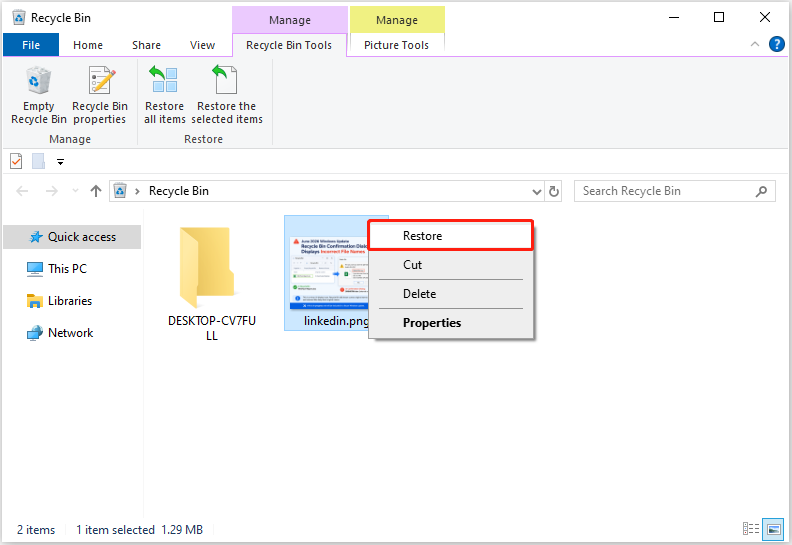
Step 1. Open the Recycle Bin from your desktop.
Step 2. Right-click the files you want to recover and click Restore. This moves the selected items to their original locations.
Read More:
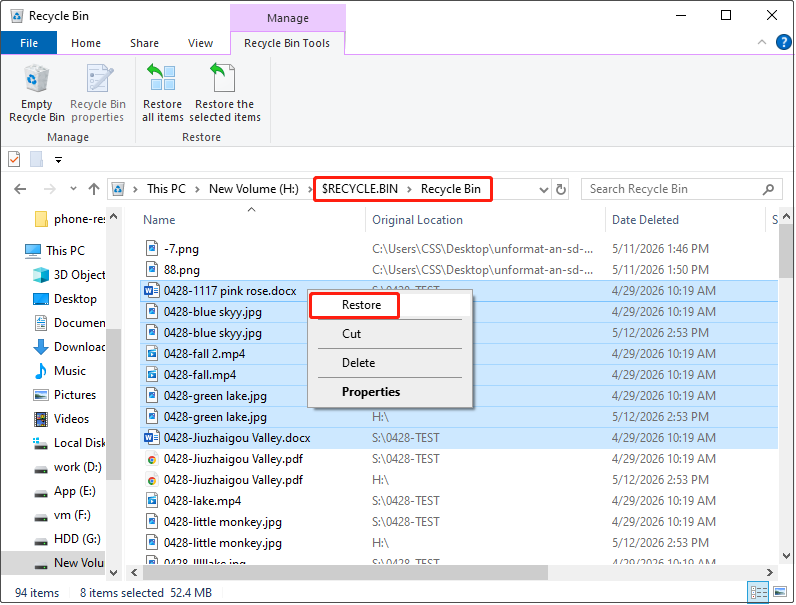
If your files were deleted from an external hard drive, first connect the drive to your computer and open it in File Explorer. Then go to the View tab and check the Hidden items box to make hidden system folders visible.
After that, check whether a $Recycle.Bin folder exists on the drive. If it is present, open it and look for your deleted files. If files are found, restore them from there.
Method 2. Use Data Recovery Software
Data recovery software is required when:
- Seagate hard drive shows as RAW, Unallocated, or inaccessible
- Files were lost due to formatting or partition error
- Recycle Bin has been emptied
A widely used Seagate data recovery software is MiniTool Power Data Recovery.
MiniTool Power Data Recovery FreeClick to Download100%Clean & Safe
Why MiniTool Power Data Recovery Free works for Seagate data recovery:
- Deep scan of Seagate HDD/SSD sectors
- Recovers files from deleted, formatted, or corrupted partitions
- Supports external Seagate drives and internal disks
- Supports all types of files, including documents, images, videos, audio, emails, and more.
- Free file preview before recovery
- 1 GB of free recovery capacity
Recovery steps:
Step 1. Select the Seagate drive and run a deep scan
Launch the free edition of the data recovery tool and select your Seagate drive from the list of detected storage devices to scan.
- An external hard drive connected by a USB cable should be marked with a USB icon.
- A RAW drive should be shown as Unidentified.
- Deleted partitions should be displayed as Lost Partition.
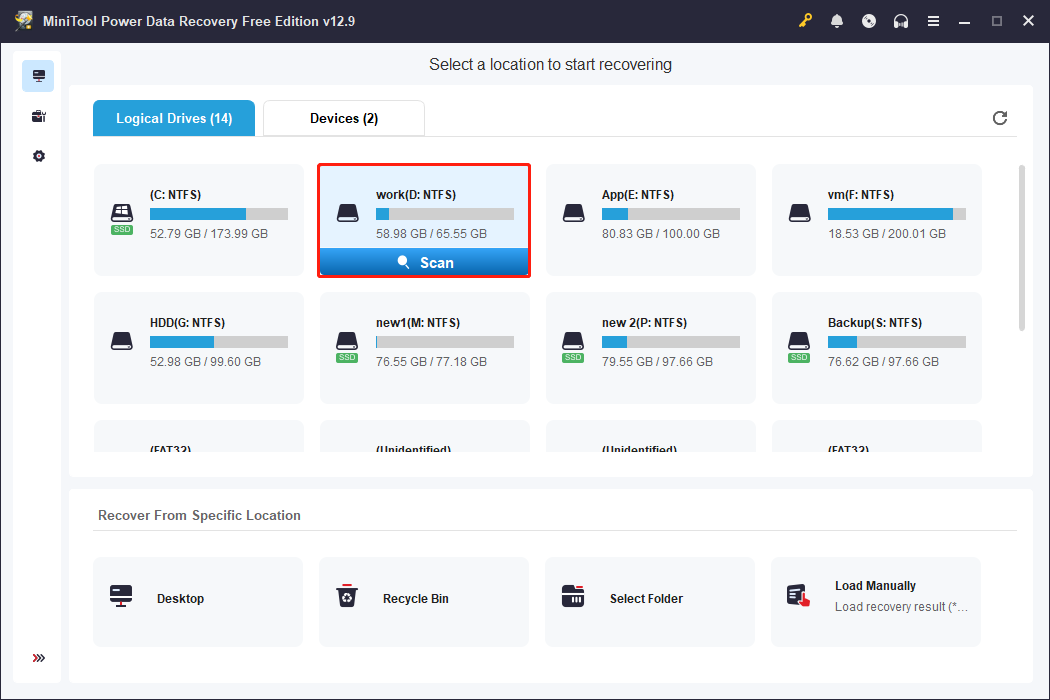
The software will run an advanced scan automatically to analyze the disk sector by sector and search for lost or deleted files that are not visible in File Explorer.
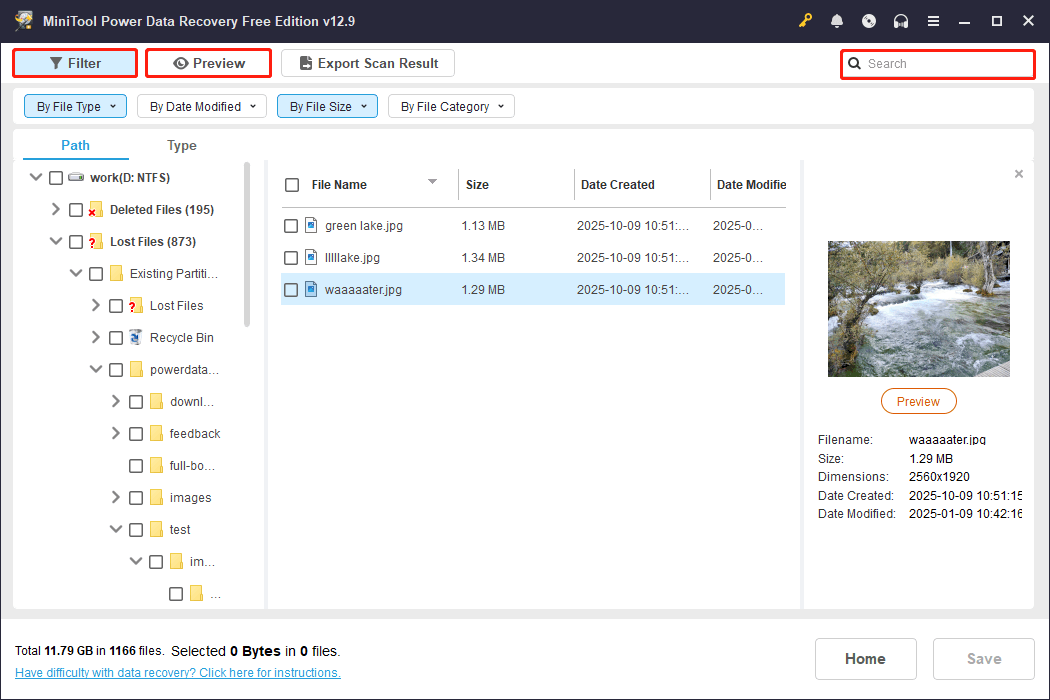
Step 2. Locate and preview required files
Once the scan is complete, the software will display all recoverable files by Path or Type.
You can use built-in tools such as Filter, Search, or Preview to quickly locate the data you need.
- Filter helps narrow results by file type, modification date, size, and category.
- Search allows you to find specific files by their names.
- Previewing files is important because it confirms whether the data is intact before recovery.
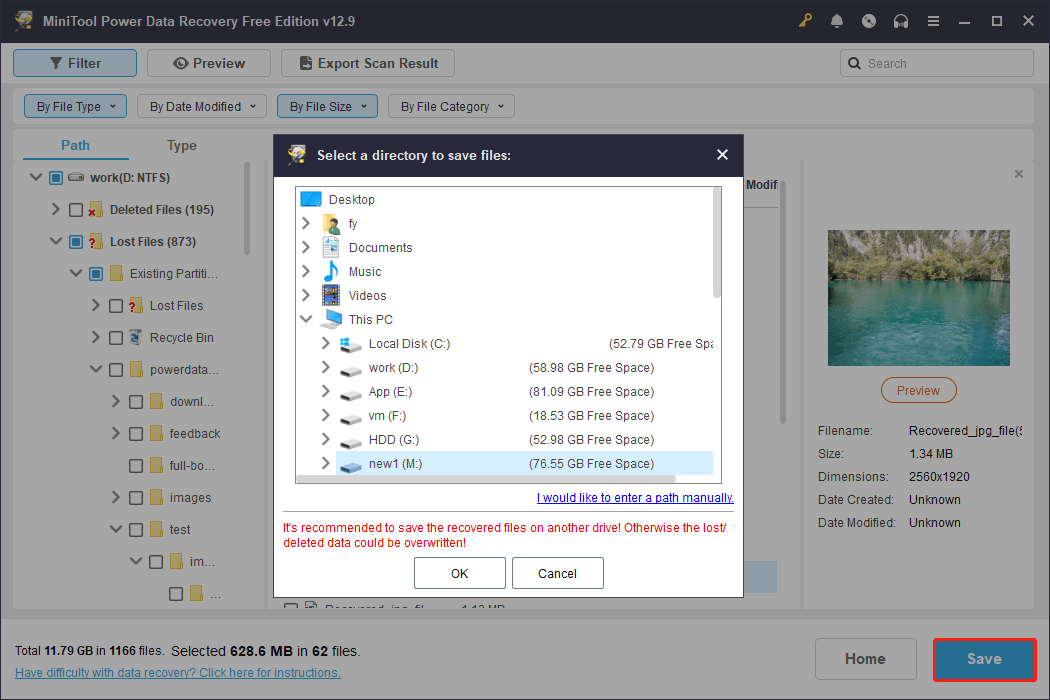
Step 3. Save files
After confirming the required files, select them, click Save, and store them to a different storage device instead of the original Seagate drive.
This is critical because writing data back to the same drive may overwrite remaining recoverable data and reduce the success rate of Seagate data recovery.

Method 3. Check for Windows Backups
This method applies when Windows backup features were enabled before data loss occurred.
Applicable scenarios:
- File History was turned on, and the files were included in the backup source
- System backup or restore points exist
- Backup snapshots created before the failure
We will take File History as an example to show you how to restore previous versions of files without using data recovery software.
Recovery steps:
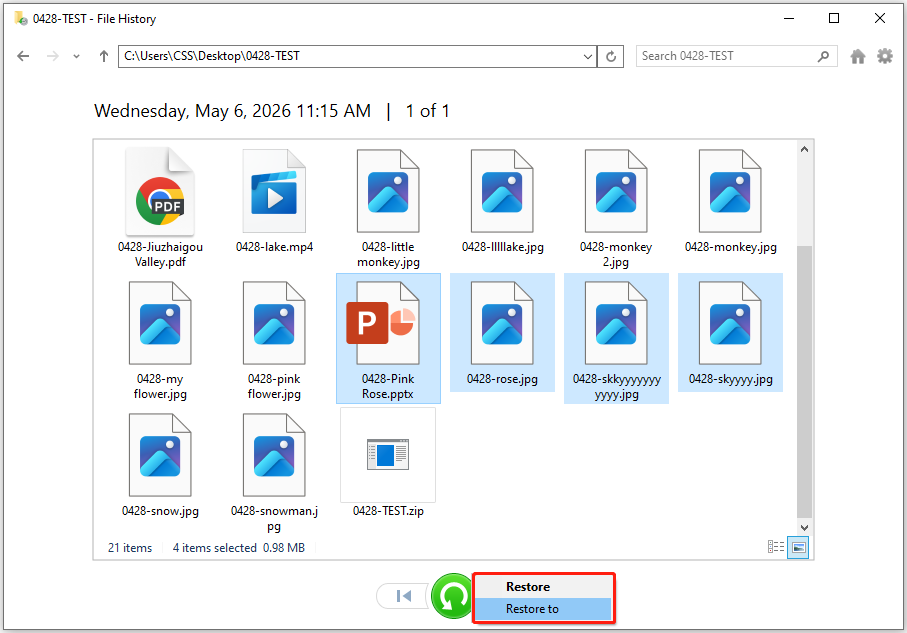
Step 1. Search for Restore your files with File History in Windows search and open File History.
Step 2. Select the files you want to restore, right-click the green Restore button, then choose Restore or Restore to.
- Restore: Recovers the files to their original locations.
- Restore to: Recovers the files to a location you choose.
This method is completely dependent on prior configuration. If backup was not enabled, it cannot be used for Seagate data recovery.
Method 4. Use Seagate Rescue Data Recovery Services
When the drive is physically damaged or not detected at all, software recovery is no longer effective. In this case, consider Seagate Rescue Data Recovery Services.
Applicable scenarios:
- Seagate hard drive not detected by your computer
- Physical damage signs, such as clicking noises
- Firmware corruption
- Water, drop, or electrical damage
Recovery steps:
Step 1. Contact Seagate customer support with the details of your data loss to submit a recovery request.
Step 2. Send the damaged drive to the lab by using the prepaid shipping label provided by Seagate.
Step 3. Seagate will attempt to recover your files. If recovery is successful, Seagate will save your data on encrypted storage. If recovery fails, Seagate will destroy your hard drive or return it by mail upon your request.
You can follow the data recovery status through email updates.
The following Seagate drives are eligible for the Rescue Data Recovery Services:
External Drives
- Ultra Touch
- One Touch
- Expansion
- Backup Plus
- Photo Drive
Game Drives
- Game Drive for Xbox
- FireCuda Gaming Dock
- FireCuda Gaming SSD
Internal Drives
- Iron Wolf
- Iron Wolf Pro
- SkyHawk
- SkyHawk AI
- FireCuda
Seagate Data Loss Prevention Tips
Preventing data loss is more reliable than recovery. Listed below are some useful tips to reduce future Seagate data loss risks:
- Enable File History automatic backup for Seagate internal hard drives. For external hard drives, save copies of files.
- Safely eject Seagate external hard drives before unplugging
- Avoid using one drive for both system and data backup
- Check hard drive health regularly
- Replace aging drives
Conclusion
Seagate data recovery depends on the type of failure. Most logical issues can be solved using software or backup tools. Severe hardware failure requires professional recovery services.
The key principle in Seagate hard drive recovery is to avoid further writing to the damaged drive, as this directly affects recovery probability.
If you have any questions when using MiniTool Power Data Recovery, contact the tech support team at [email protected].
Seagate Data Recovery FAQ
If the drive is not detected or has physical damage, professional recovery services are needed.
The official Seagate recovery service is also safe, as it operates in a cleanroom environment. Recovered data is returned to you on an encrypted drive.
Professional services are significantly more expensive, especially for physical damage cases.
About The Author

Position: Columnist
Shirley holds a bachelor’s degree in English and has been an editor at the MiniTool Team for many years. She specializes in IT-related content, with a focus on data recovery, file backup, disk management, and other technical topics. She is committed to delivering clear, accurate, and practical solutions to help users resolve common computer issues.
User Comments :