

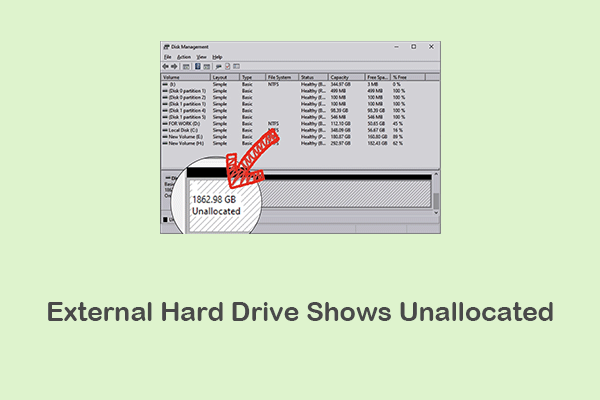
External Hard Drive Shows Unallocated: Data Recovery & Fixes
This guide explains how to fix the problem where an external hard drive shows unallocated by initializing the disk and creating new partitions.
By Chelsea / Published
Hard drives are important and frequently used data storage media. When using a hard drive with a PC, Xbox device, or another machine, you may encounter issues like hard drive crash, operating system not found, HDD shows as unknown, your disk needs to be checked for consistency, DiskPart has encountered an error, or some other kinds of issues.
Provided that the files on the hard drive are vital, you can first try MiniTool Power Data Recovery to rescue them and then use specialized solutions to solve the issues.
This guide explains how to fix the problem where an external hard drive shows unallocated by initializing the disk and creating new partitions.
This post explains why the Toshiba hard drive not working problem occurs and how to fix it to restore the drive to normal operation.
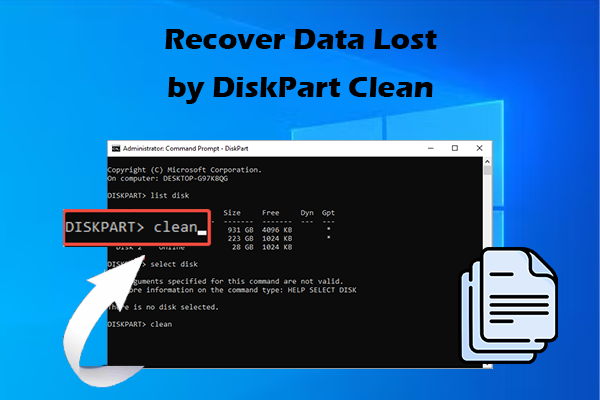
This guide examines the possibility of data recovery after running DiskPart clean and clean all and introduces how to recover data lost by DiskPart clean.
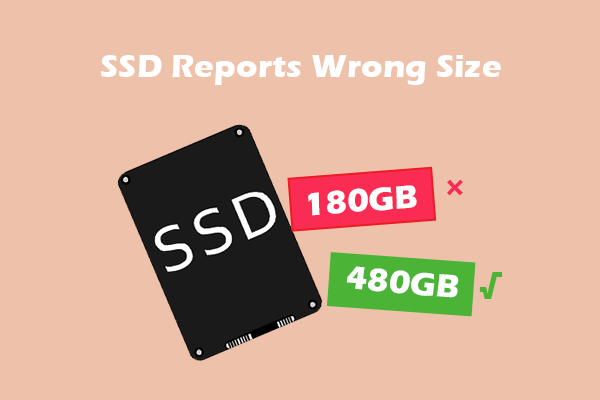
This guide explains why an SSD reports wrong size in File Explorer and provides feasible solutions to restore its full capacity without data loss.
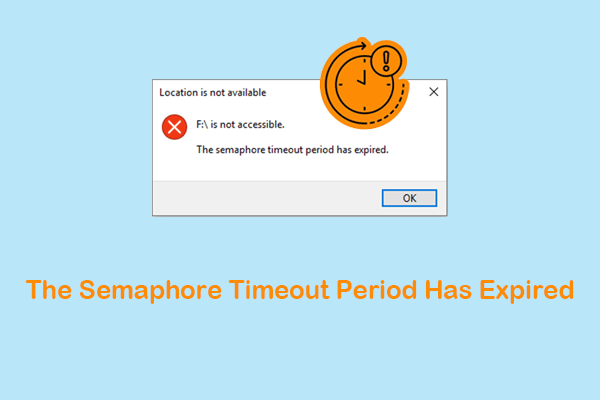
Learn how to fix the “The semaphore timeout period has expired” error in situations where you cannot copy files and access the disk.

This post shows how to access Ext4 files on Windows. When the disk runs well, export files. When it is corrupted, perform Ext4 data recovery.
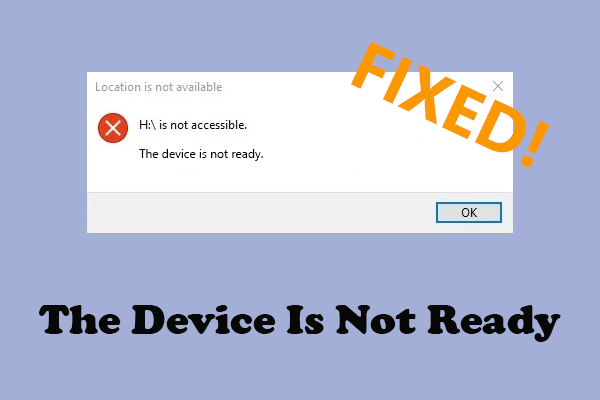
This guide helps you fix the “device is not ready” disk inaccessible error using basic and advanced methods without losing your files.
If you are facing the “external hard drive keeps disconnecting” problem on Windows 11/10, this post provides six solutions to help you resolve it effectively.
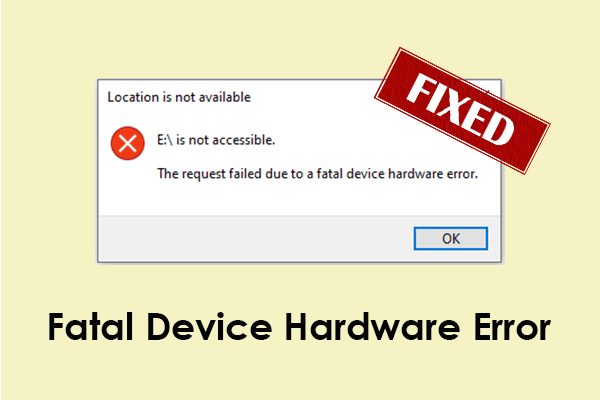
This comprehensive guide explains common reasons for the fatal device hardware error and outlines several feasible solutions to resolve it.
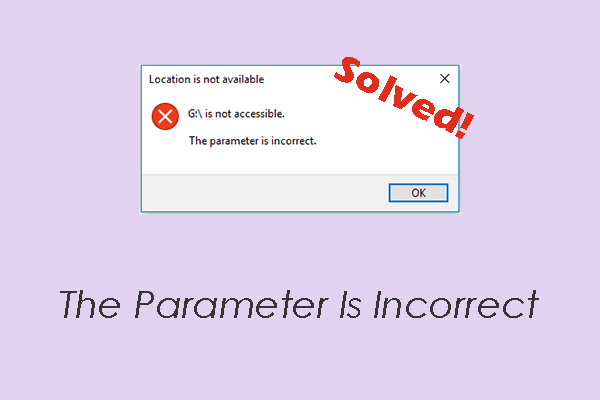
Learn how to fix “The parameter is incorrect” by running CHKDSK, updating disk drivers, running an SFC scan, formatting the disk, etc.